
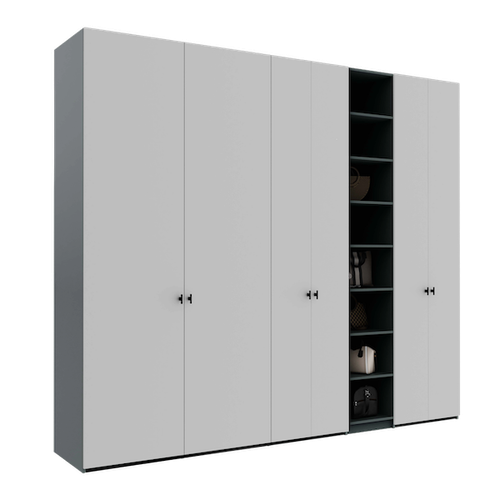
Sideboard vs Wall-Mounted TV Unit — How to Choose the Right Piece
Detailed comparison between sideboards and wall-mounted TV cabinets for the living room. Dimensions, proportions, storage, and how to configure both online with Téchne.
The living room is the central space in any home — the place where you relax, entertain guests, and most often, where the TV sits. The furniture piece supporting or surrounding the TV influences both aesthetics and functionality. Two options dominate: the classic sideboard and the wall-mounted TV cabinet (hanged unit). Each has distinct advantages, and in this article we analyze both to help you make the best decision.
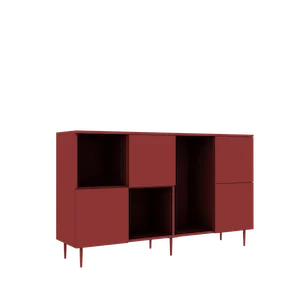
The living room sideboard — stability and generous storage
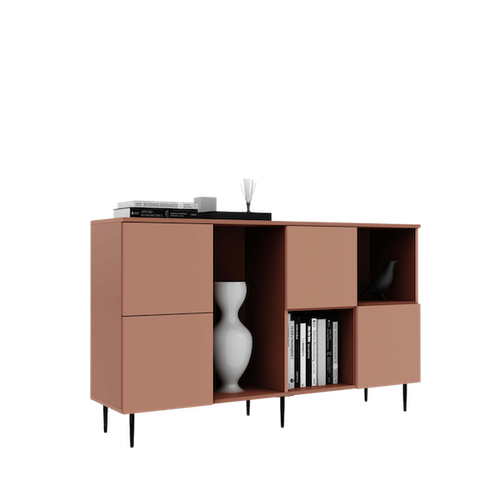
The sideboard is a floor-standing piece of furniture, typically 35-50 cm deep and 50-80 cm tall. It remains the traditional choice for the TV area and stays popular for good reasons:
- Ample storage — a sideboard offers generous space for receivers, gaming consoles, speakers, books, decorations, and various objects. The combination of drawers and doors allows category-based organization: small items in drawers, electronic equipment behind doors.
- Display surface — the top surface is perfect for decorations, photo frames, plants, or ambient lighting. This extra surface is an advantage that wall-mounted units don't offer.
- Maximum stability — being floor-standing (on legs or a plinth), the sideboard doesn't require wall mounting and can support considerable weight on top, including large TVs without a wall bracket.
- Warm, anchored look — the sideboard creates a solid visual base under the TV, giving a sense of substantial, well-proportioned furniture.
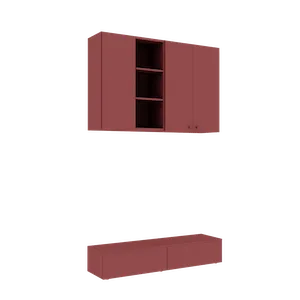
The wall-mounted TV unit — minimalism and visual space
The wall cabinet mounts directly on the wall at your desired height, with no floor contact. This option has gained ground in modern design for several reasons:
- Visual floor space — by eliminating floor contact, the room appears more spacious and airy. This is a major advantage for small spaces and studio apartments, where every centimeter counts.
- Easy cleaning — you can vacuum or mop under the unit without moving furniture. For families with pets or those who value impeccable cleanliness, this makes a real difference.
- Minimalist aesthetic — clean lines and the absence of legs or a plinth create a contemporary look, suited to Scandinavian, industrial, or minimalist styles.
- Height flexibility — you can mount the unit at exactly the level you want, depending on sofa height, TV position, or aesthetic preferences.
Dimensions and proportions relative to the TV
A frequently overlooked aspect is the dimensional relationship between furniture and TV. Here are some basic rules:
- Furniture width — ideally, the sideboard or wall unit should be at least as wide as the TV, or 10-20% wider. Furniture narrower than the TV creates an unpleasant visual imbalance. For example, for a 55" TV (about 123 cm wide), the sideboard should be at least 120-150 cm.
- TV height — the center of the screen should be at eye level when sitting on the sofa (approximately 100-110 cm from the floor). If using a 60 cm tall sideboard with the TV on top, the screen center lands at about 90-95 cm — nearly perfect. With a wall-mounted unit, you mount the TV above on a bracket and adjust height precisely.
- Depth — for sideboards, 40-45 cm depth is standard. Wall-mounted units can be shallower (25-35 cm) since they don't need to support the TV on top.
With the Téchne sideboard configurator, you can set the width to the millimeter, ensuring perfect proportions for your TV.
What needs storing — and where
Storage needs vary from case to case. Here's how the two options compare:
Media equipment (receiver, soundbar, console, router): a sideboard houses them easily in door compartments, with the option to route cables behind the furniture. Wall-mounted units can accommodate smaller equipment, but you need to manage cabling that runs down to the outlet.
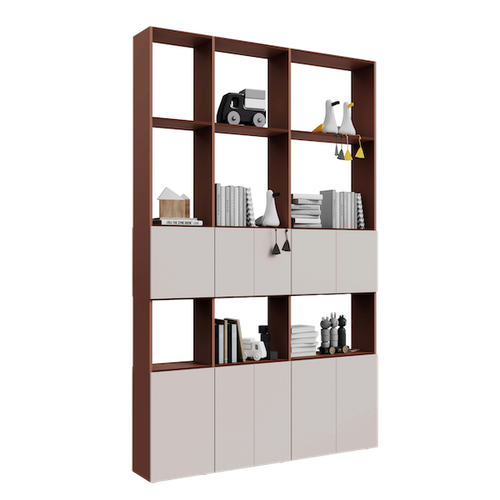
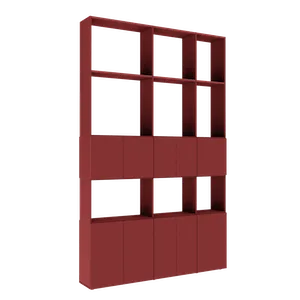
Books and decorative objects: the sideboard offers both a top surface and interior space. The wall unit offers only interior space — but you can add open shelves or a combination of modules on the TV wall for a spectacular effect.
Small items (remotes, batteries, documents): sideboard drawers are ideal. Wall units can also have drawers, but accessibility depends on the mounting height.
Wall-mounted vs floor-standing — technical factors
The decision between wall-mounted and floor-standing involves technical considerations:
- Wall type — a wall-mounted unit requires a solid wall (concrete, brick) or a reinforced drywall structure with metal profiles and special anchors. The wall must support the furniture weight plus contents. If the wall is fragile or made of lightweight materials, a floor-standing sideboard is the safe option.
- Electrical installation — a wall-mounted unit looks best when cables are hidden in the wall. If you don't have an outlet and cable channel behind the TV, the sideboard naturally covers all connections.
- Maximum weight — a floor-standing sideboard can support heavy loads without restrictions. A wall-mounted unit has a limit determined by anchor capacity and wall strength.
The perfect combination: sideboard + wall unit
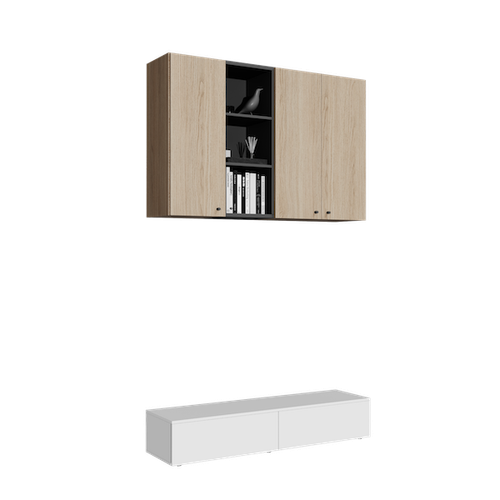
You don't necessarily have to choose one or the other. Many modern living rooms combine a low central sideboard with one or two wall-mounted units above or to the sides. This combination offers:
- Floor-level storage (sideboard) + overhead storage (wall unit)
- Visual variety — alternating filled and empty space creates dynamism on the TV wall
- Flexibility — you can add or move wall units independently
At Téchne, you can configure the sideboard and the wall unit separately, choosing the same materials and finishes for a unified look.
Materials and finishes to consider
Regardless of form, materials matter enormously in the living room — it's the most visible room. Some popular combinations:
- Natural oak melamine chipboard + white — classic, warm, works in any style
- Painted MDF Soft Touch anthracite grey — premium, modern, fingerprint-resistant (full painted MDF guide)
- White ribbed MDF — adds texture and character without being too dominant
- Aluminum frame doors with glass — perfect for display cabinets or showcase compartments with interior lighting
The Téchne configurator offers over 80 finishes for every component — carcass, fronts, handles. You can mix and match until you find the ideal combination.
How your living room style influences your choice
Your interior style provides clear clues:
- Minimalist / Scandinavian — wall-mounted white or light oak unit, straight lines, no handles (push-open)
- Industrial / Loft — low sideboard, black or dark grey, with metallic accents
- Classic / Traditional — solid sideboard with drawers, dark wood finish, elegant handles
- Modern luxury — sideboard + wall unit combination in High Gloss MDF, with hidden LED lighting
Summary — when to choose a sideboard vs a wall unit
Choose the sideboard if:
- You need generous storage
- You want a display surface (top)
- The wall can't support heavy mounting
- The TV sits on furniture, not on the wall
- You prefer a classic, anchored look
Choose the wall-mounted unit if:
- You want a minimalist, airy look
- The room is small and you need visual floor space
- The TV is wall-mounted
- The wall is solid and allows mounting
- You want vertical placement flexibility
Configure your ideal living room piece now:
Both options benefit from the same premium materials, Hafele hardware, and 5-year warranty. Design, visualize in 3D, and order — all online, from the comfort of your home.