
Hinged vs sliding wardrobe doors: which are better?
We compare hinged and sliding wardrobe doors. Discover why hinged doors are the right choice for most spaces and how they impact functionality and design.
When it comes to choosing doors for a new wardrobe, the decision between hinged and sliding doors can seem difficult. In reality, each system has its advantages, but hinged doors have made a strong comeback in interior design trends and there are solid reasons for that. In this article, we objectively analyze both options and explain why hinged doors are, in most cases, the superior choice.
What are hinged doors and why are they trending?
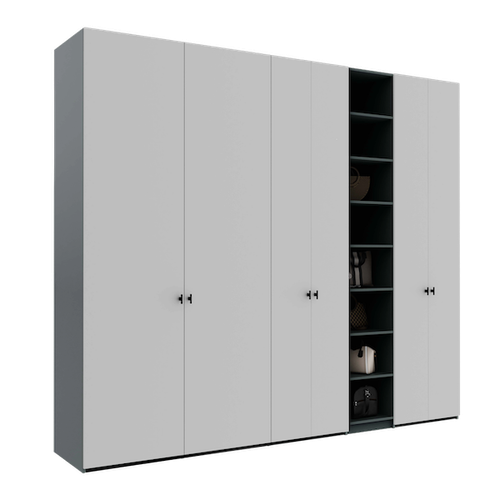
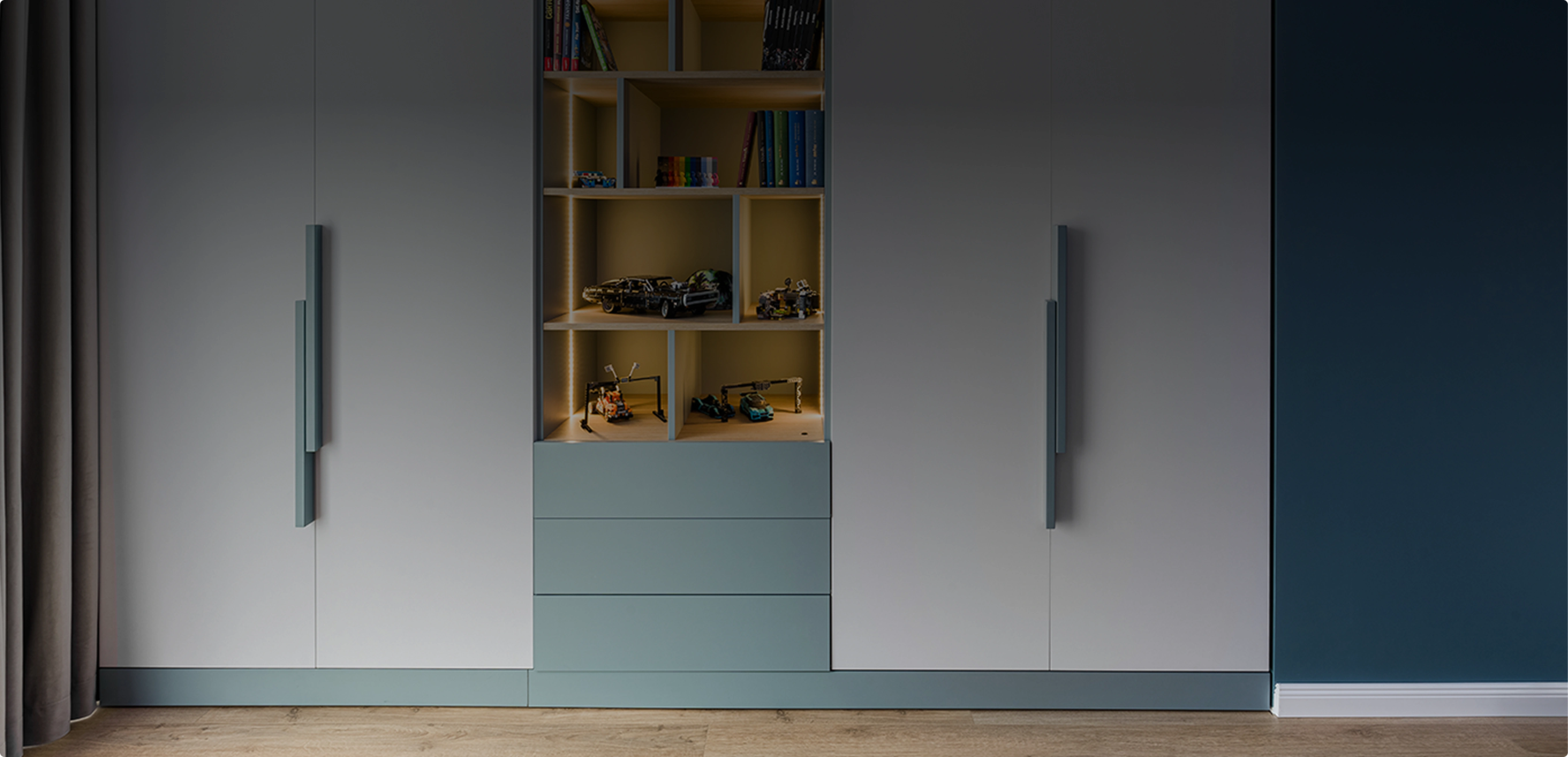
Hinged doors (or classic hinge-opening doors) are the most traditional closing system for wardrobes. In recent years, interior designers have brought them back to the forefront thanks to their clean lines, versatility, and the premium feel they deliver. A wardrobe with hinged doors looks elegant, modern, and offers complete access to the entire interior.
Current interior design trends emphasize simplicity, natural materials, and maximum functionality — exactly what hinged doors offer. Whether you choose a matte, glossy, or textured finish, hinged doors allow a wide range of aesthetic customizations.
Advantages of hinged doors
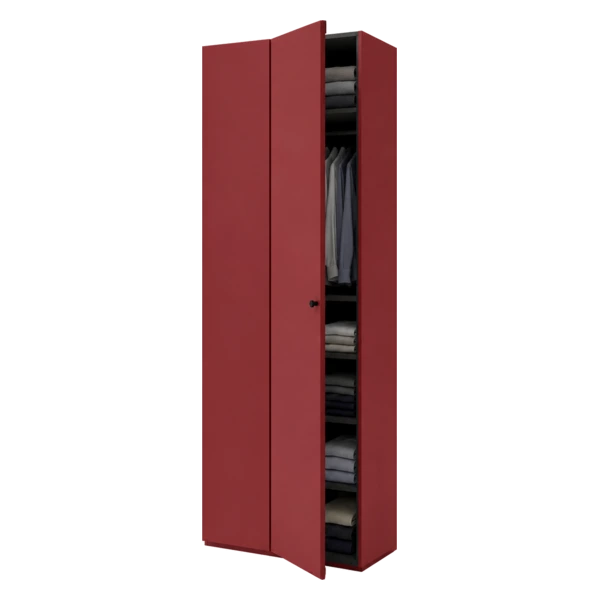
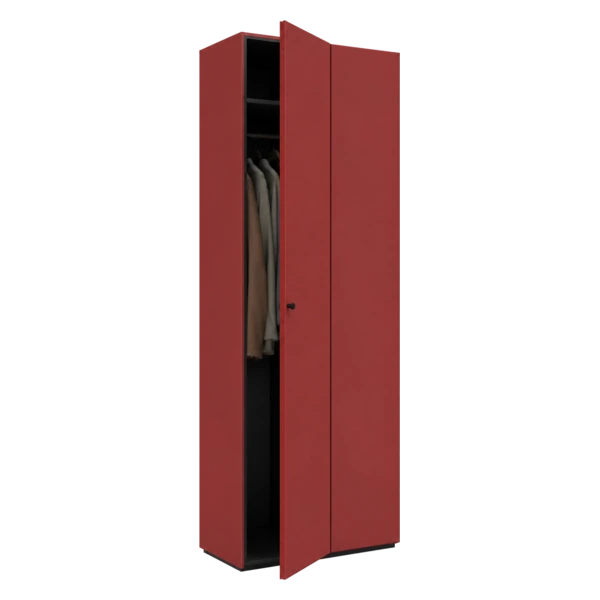
- Simultaneous access to the entire interior — You can open all doors at the same time and have complete visibility of the wardrobe contents. No more shifting one door to reach the other half.
- No lost interior space — Unlike sliding doors, which require rails and an interior channel, hinged doors do not steal depth from the wardrobe. You gain 5-8 cm of usable interior space.
- Exceptional durability — Modern hinges, such as those from Hafele, have a lifespan of over 100,000 opening-closing cycles. With minimal maintenance, they function flawlessly for decades.
- Silent closing — Soft-close hinges from Hafele ensure a smooth, noiseless closing — a luxury detail that makes a difference in everyday life.
- Low maintenance cost — Hinges are easy to adjust and replace. In contrast, sliding door rails can accumulate dust, jam, or require complete system replacement.
- Versatile design — Hinged doors allow the mounting of mirrors, decorative handles, or even push-to-open systems for a minimalist, handle-free look.
When can sliding doors be useful?
Sliding doors have their place in specific situations. For example, in a narrow hallway where there is no physical space for hinged doors to open, or in a dressing room where the wardrobe is positioned very close to the bed. In these cases, sliding doors solve a real space problem.
However, even in small spaces, there are elegant alternatives: hinged doors with 90-degree opening or folding doors (accordion style) can be better solutions than sliding doors, as they maintain the advantage of complete interior access.
Disadvantages of sliding doors
- Limited access — You can only access half the wardrobe at any given time, making organization and finding clothes more difficult.
- Loss of interior space — Rails and the guiding mechanism take up 5-8 cm of wardrobe depth.
- More expensive maintenance — Rollers and rails wear over time and may require complete replacement.
- Design limitations — Sliding doors are harder to customize and do not allow mounting accessories on the interior side.
What does Téchne Furniture choose?
At Téchne Furniture, our wardrobes are configured by default with hinged doors equipped with Hafele soft-close hinges. We made this choice after years of experience and customer feedback, because hinged doors offer the best combination of aesthetics, functionality, and durability.
Every wardrobe is designed to the millimeter, with hinged doors that fit perfectly within the chosen frame. You can choose the finish, handle type, and interior configuration exactly to your needs.
Frequently asked questions about hinged doors
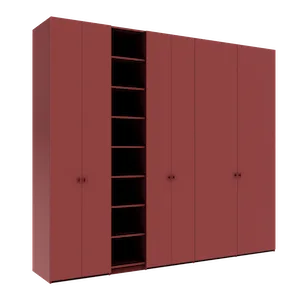
Many customers ask us whether hinged doors are suitable for wide wardrobes. The answer is yes — a 300 cm wide wardrobe can have 4-6 hinged doors, each with an optimal width of 45-60 cm. Each door opens independently, providing instant access to the desired section. Additionally, hinged doors can be fitted with mirrors on the interior face, eliminating the need for a separate mirror in the room.
Another common question concerns noise. Hafele soft-close hinges completely eliminate closing noise. You can close the wardrobe door at night without waking anyone — a real advantage in bedrooms.
Want to see what your wardrobe would look like with hinged doors? Configure your wardrobe online and experience the difference.
How door type influences interior organization
The chosen door type directly affects how you can organize the wardrobe interior. Hinged doors allow mounting accessories on the door interior — tie holders, shoe pockets, or mirrors. Sliding doors, by nature of their mechanism, do not offer this possibility, as the door does not have an accessible interior face when open.
Additionally, with hinged doors you can open all compartments simultaneously and get a full overview of your entire wardrobe. This simplifies choosing an outfit in the morning and helps maintain order — you immediately see what is missing or needs reorganizing.
In contrast, sliding doors limit access to half the wardrobe at any given time. If you have a 200 cm wardrobe with two sliding doors, you open either the left or the right side — never both simultaneously. This can be especially frustrating with wider wardrobes, where you need quick access to different sections.
What options does the Téchne configurator offer
In the Téchne online configurator, hinged doors are the standard option and come with a full range of customizations:
- Finishes — melamine chipboard in over 30 colors, painted MDF in 49 RAL/NCS colors, ribbed MDF, clear or smoked mirrors
- Handles — classic metal handles, profile handles, or push-to-open handle-free system
- Configuration — each door can have a different finish, allowing creative combinations (for example, side doors in matte MDF and a center door with mirror)
The price updates in real time as you make choices, and the 3D model instantly reflects every change.