
Sideboard with Drawers vs Sideboard with Doors — What Fits Your Needs
Pros and cons of drawers vs doors on sideboards. What to store in each, drawer glide types, mixed options, and how to freely configure the interior with Téchne.
When configuring a sideboard, one of the first decisions you make is the front structure: drawers, doors, or a combination of both. This isn't purely an aesthetic choice — each option fundamentally changes how you interact with the furniture daily. In this article, we analyze the advantages and disadvantages of each option, what to optimally store in each, and how to achieve the ideal combination.
Drawers — direct access and layered organization
The drawer is probably the most efficient storage system ever invented. Pull — and you see everything at a glance. This complete visibility of contents makes drawers ideal for:
- Small, flat items — underwear, socks, ties, handkerchiefs, jewelry. In a drawer, these items stay organized and accessible, unlike on a shelf where they'd mix together.
- Bed linen and towels — deep drawers can house complete bedding sets, folded and stacked. When you open the drawer, you see all available sets.
- Documents and stationery — in an office or living room sideboard, drawers are perfect for folders, notebooks, pens, cables, and tech accessories.
- Cutlery and kitchen textiles — in a dining sideboard, drawers keep everything in its place.
An underestimated advantage of drawers is complete use of depth. With a shelf behind a door, items at the back are hard to reach. The drawer brings everything to the front.
Doors — voluminous and flexible space
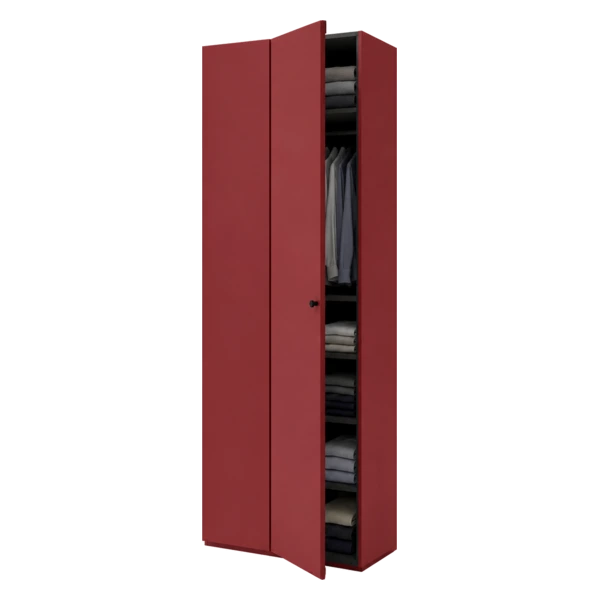
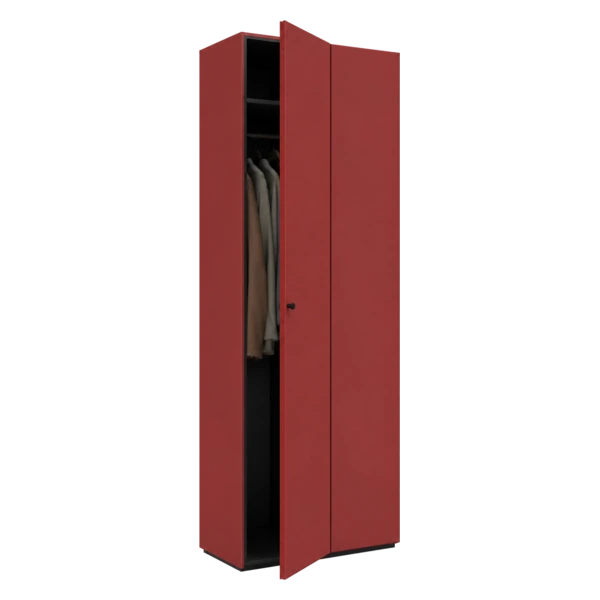
Door compartments offer a more voluminous interior space with greater flexibility for the height of stored objects:
- Electronic equipment — receiver, gaming console, router, amplifier. These objects have varied shapes and sizes that don't fit in drawers but sit perfectly on shelves behind doors.
- Books and photo albums — books stand vertically on shelves, visible and accessible. A drawer isn't practical for books.
- Tall or bulky objects — vases, bottles, board game boxes, small appliances. The door compartment offers free height without drawer restrictions.
- Hiding clutter — a closed door instantly conceals contents. If you don't have time to organize perfectly, the door solves the visual problem.
Pros and cons — a synthetic overview
Drawers — advantages:
- Complete visibility of contents
- Equal access to items at front and back
- Natural category-based organization
- Better dust protection (closed drawers seal better)
- Superior ergonomics — no bending to search at the back
Drawers — disadvantages:
- Higher cost — the slide mechanism is an additional component compared to hinges
- Height limitation — the drawer has a fixed height
- Space required in front — the drawer must be pulled out fully for access; you need maneuvering room
- Weight limitation — drawers have a maximum load capacity determined by slide quality
Doors — advantages:
- Flexible interior height
- Lower cost (hinges are cheaper than quality slides)
- Ability to add or move interior shelves
- Side opening — doesn't require depth space
Doors — disadvantages:
- Items at the back are hard to reach on deep shelves
- Limited visibility — you must actively search
- Hinged doors require opening space to the side or front
Types of drawer slides and what determines drawer quality
Not all drawers are created equal. The quality of the slide mechanism makes the difference between a drawer that works flawlessly for 15 years and one that jams after 2. Here are the main types:
- Roller slides — the simplest and cheapest mechanism. The drawer slides on plastic rollers. Limited to about 75% of drawer depth (doesn't open fully). Capacity: 15-20 kg. Found in entry-level furniture.
- Ball-bearing slides — the standard medium-quality mechanism. Ball bearings ensure smoother, quieter movement. Full extension available. Capacity: 25-35 kg.
- Soft-close slides — identical to ball-bearing slides but with a damping mechanism that brakes the drawer in the last 3-5 cm, preventing slamming. Essential for modern furniture — eliminates noise and protects contents.
- Premium Hafele / Blum systems — drawers with integrated metal sides (Tandembox, Matrix), full extension, soft-close, 30-65 kg capacity. Optional: push-open (handleless opening) and auto-close. Téchne uses Hafele hardware for all drawers.
A good drawer is defined by: smooth movement, full extension, soft-close, and adequate capacity. Don't economize on slides — it's the component you use dozens of times a day.
Mixed options — the best of both worlds
Who said you must choose exclusively drawers or exclusively doors? The most functional sideboards combine both:
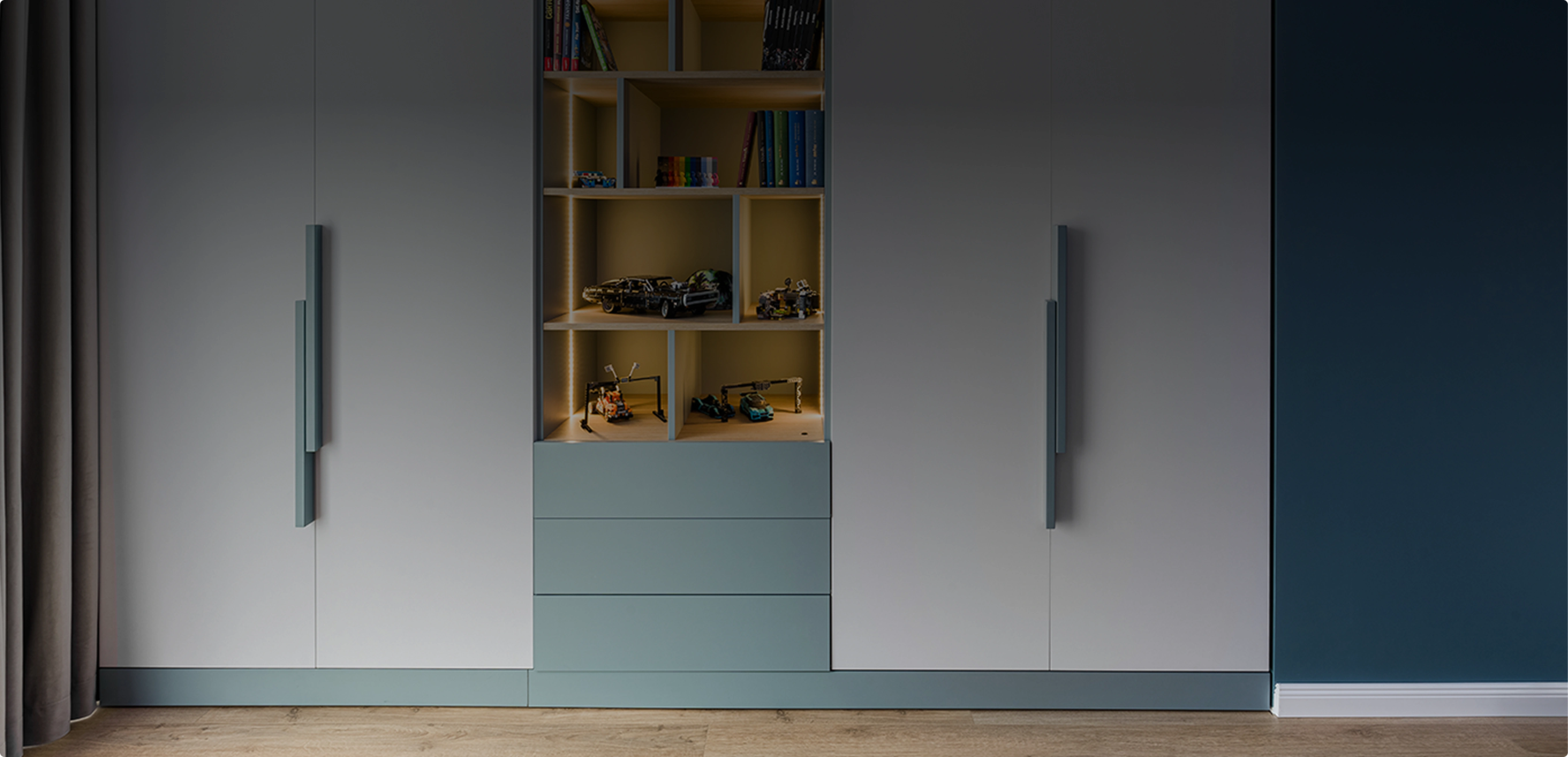
- Drawers on top, doors below — upper drawers for small items (within reach), lower door compartments for larger objects
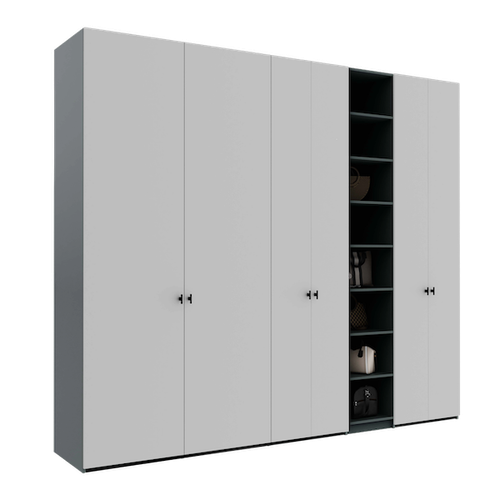
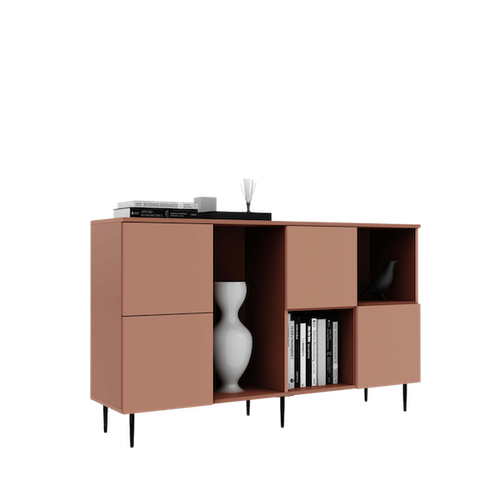
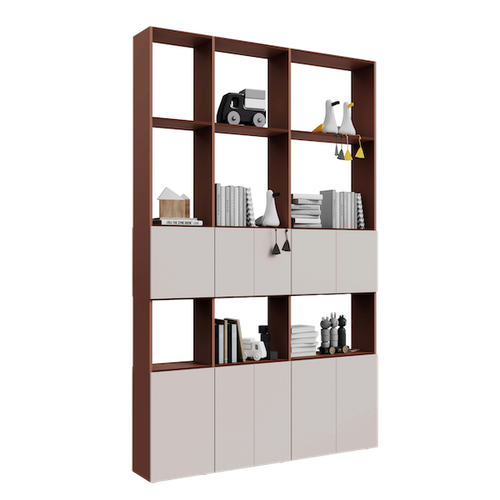
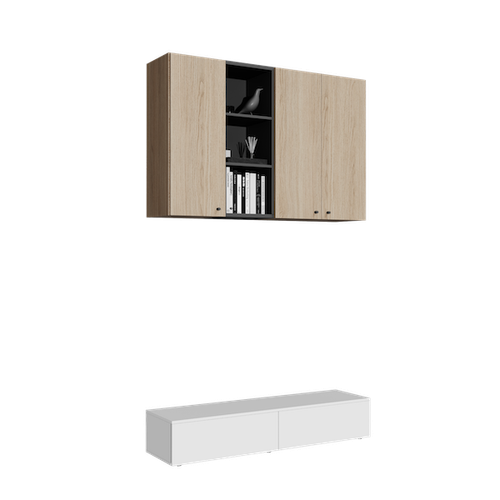
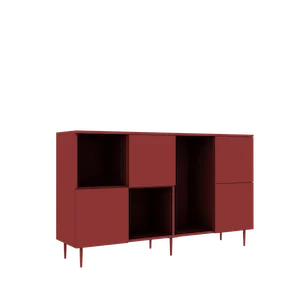
- Side drawers + central door compartment — popular layout for living room sideboards, where the center hides electronics and the sides organize accessories
- One large drawer on top + doors below — the minimalist combination: drawer for daily items, doors for long-term storage
- Sideboard with doors and hidden interior drawer — behind doors, an additional interior drawer for valuables or sensitive documents
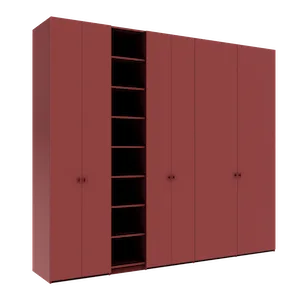
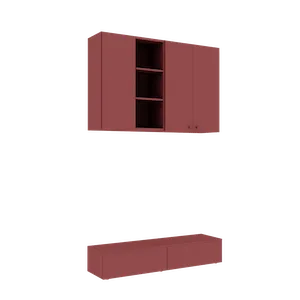
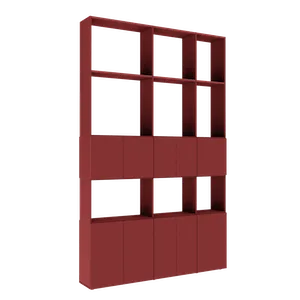
With the Téchne sideboard configurator, you can freely combine drawers and doors in any arrangement. Each sideboard column can be independently configured — single drawer, double drawer, hinged door, or combinations. You're not limited by a predefined catalog.
How to choose — practical questions
Answer these questions and you'll know which structure suits you:
- What will you predominantly store? — small, flat items → drawers; bulky or tall items → doors
- How much space is in front of the sideboard? — less than 50 cm → prefer doors (side opening); over 50 cm → drawers work perfectly
- Who uses the sideboard? — small children → soft-close drawers are safer (won't catch fingers); elderly → drawers are more ergonomic (no bending)
- What's your budget? — quality slide drawers cost more than hinged doors; mixing allows cost/function optimization
Bedroom sideboard vs living room sideboard
The sideboard's destination influences your choice:
Bedroom sideboard (full guide) — predominantly drawers. The bedroom demands organization for linen, folded clothes, personal accessories. Drawers keep everything orderly and within reach. A large drawer for bed linen + smaller drawers for personal items is the classic combination.
Living room sideboard — mix of drawers and doors. The living room has diverse needs: media, books, decorations, small items. The combination offers maximum flexibility. Door compartments can have adjustable shelves to adapt to contents.
Freely configure your sideboard interior
The major advantage of custom furniture over flat-pack is total configuration freedom. At Téchne:
- Choose the number of columns and width of each
- Each column can have drawers, doors, or combinations
- Add or remove interior shelves freely
- Choose slide and hinge types
- Choose front finishes independently from the carcass — you can have drawers in one color and doors in another
- Visualize the result in real time in the 3D configurator
The price updates instantly with every modification, no surprises. And if you're unsure, you can save the configuration and return anytime. The Téchne configurator protects you from mistakes — it doesn't allow configurations that can't be manufactured or incompatible material combinations.
Start configuring the perfect sideboard: Open the Téchne sideboard configurator
With a 5-year warranty, Hafele hardware, and delivery throughout Romania, your sideboard will work flawlessly for years — whether you choose drawers, doors, or the ideal combination.