
Eco-Friendly Sustainable Furniture: How to Choose Responsible Materials for Your Home
Learn about FSC and PEFC certifications, E1 emission class, recycled chipboard, and why durable furniture is the most sustainable choice.
Sustainability is no longer an abstract concept — it is a concrete decision you make every time you furnish a room. Furniture represents a long-term investment, and choosing the right materials affects not only your family's health but also the environmental impact. In this guide, we explain what eco-friendly furniture truly means and how you can make informed choices.
Certifications That Matter: FSC and PEFC
When you hear about certified wood or chipboard, the two international reference standards are:
- FSC (Forest Stewardship Council) — guarantees that wood comes from responsibly managed forests where harvesting occurs at a rate that allows natural regeneration. FSC certification covers the entire chain of custody, from forest to finished product.
- PEFC (Programme for the Endorsement of Forest Certification) — the most widespread forest certification system worldwide. It promotes sustainable forest management through national standards adapted to regional specifics.
Téchne furniture uses chipboard from certified European manufacturers, ensuring material traceability from source to the finished product installed in your home.
E1 Emission Class: The Air in Your Home Matters
Chipboard contains formaldehyde-based resins used as binding agents. Formaldehyde is a volatile organic compound that, in high concentrations, can affect indoor air quality and health.
E1 class represents the mandatory European standard that limits formaldehyde emissions to a maximum of 0.1 ppm (parts per million). This level is considered safe for use in indoor spaces, including children's rooms and bedrooms.
There is also the E0.5 class (or Super E0), which halves emissions compared to E1. At Téchne, all chipboard materials used meet at least the E1 class, and many premium options are at E0.5 level.
Chipboard with Recycled Content: Circular Economy in Furniture
Modern chipboard can contain between 30% and 70% recycled wood — sourced from old furniture, production waste, or post-consumer wood. This approach has multiple benefits:
- Reduces pressure on forests — less virgin wood needed
- Minimizes waste — old furniture becomes raw material instead of landfill
- Lowers carbon footprint — processing recycled wood consumes less energy than harvesting and transporting fresh timber
The European chipboard manufacturers we work with constantly invest in increasing the percentage of recycled material without compromising strength or surface quality.
Durability: The Most Sustainable Strategy
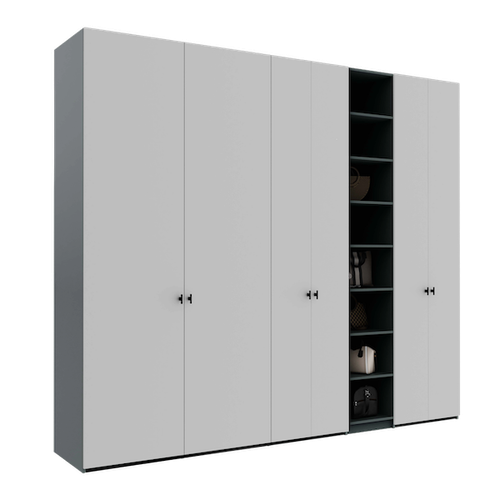
Paradoxically, the most ecological piece of furniture is not necessarily the one made from exotic materials labeled as green — but the one that lasts. A custom wardrobe built from quality materials, with durable Hafele hardware and dimensions adapted to your space, will function flawlessly for 15-20 years.
By comparison, flat-pack standard furniture, often made from thin chipboard with cheap hardware, may need replacement after 3-5 years. Three cheap wardrobes replaced over 15 years generate three times more waste and consume three times more resources than a single quality wardrobe.
Local Production Reduces Transport Footprint
Téchne furniture is manufactured in Romania, which means:
- Reduced transport — no thousands of kilometers from factories in Asia or far western Europe
- Flexibility — made-to-order production eliminates stock and waste associated with unsold products
- Local economy — you support jobs and expertise in Romania
The combination of certified materials, low emissions, recycled content, durability, and local production makes custom Téchne furniture a responsible long-term choice.
Choose sustainable materials for your furniture: Configure online now
How to Verify If Furniture Is Truly Eco-Friendly
The market is full of marketing claims like "eco-friendly" or "natural" that are not always backed by real certifications. Here is how to tell the difference:
- Ask for the certificate, not just the label — a serious supplier can present the FSC or PEFC certification documents for the materials used. If they cannot, the sustainability claims are likely exaggerated.
- Check the emission class — request the chipboard technical specification that explicitly mentions E1 class (or E0.5). This document is issued by the panel manufacturer, not the furniture maker.
- Material origin — wood or chipboard from Western Europe (Germany, Austria, Scandinavia) generally meets stricter standards than imports from outside the EU.
- Hardware matters too — quality hardware (like Hafele) is manufactured to last, reducing the need for replacement. Cheap hardware that fails after 2-3 years generates waste and additional costs.
Practical Tips for a More Sustainable Home
Beyond material selection, you can make your furniture more sustainable through practical decisions:
- Choose exact dimensions — furniture configured to the centimeter eliminates material waste. A standard wardrobe that does not fit the space leaves unused areas, and panels cut to fixed dimensions generate more production waste.
- Opt for durable finishes — quality melamine chipboard resists scratches and moisture, extending the furniture's lifespan. 2mm ABS edging protects edges against premature deterioration.
- Invest in premium hardware — Hafele hinges and slides are designed for 50,000+ usage cycles, meaning 15-20 years without needing replacement.
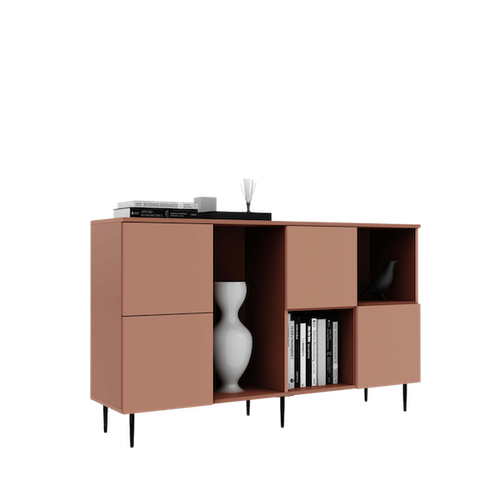
- Think modular — a room divider or a configurable sideboard can adapt if you move to another home or if your needs change. Rigid furniture that only works in a specific space becomes waste if you relocate.
Every conscious decision — from material certification to hardware quality — contributes to reducing environmental impact and creating a healthier home for your family.