
Custom Hallway Wardrobe: How to Configure It for Your Space
Complete guide for choosing and configuring a custom hallway wardrobe. Optimal dimensions, compartmentalization and practical tips.
The hallway is the first impression of your home, but also one of the most difficult spaces to furnish. Narrow dimensions, irregular corners, doors opening in the way — a custom hallway wardrobe solves all these challenges.
Why a Custom Wardrobe for the Hallway?
Hallways rarely have standard dimensions. A 120 cm prefabricated wardrobe leaves dead space, while a 150 cm one won't fit. Custom furniture adapts to the centimeter: 137 cm width, 247 cm height, 42 cm depth — exactly what you need.
Typical Hallway Challenges
Hallways in most apartments have their own quirks. In older buildings, the hallway is usually 150-200 cm wide, but with doors opening inward, the usable space decreases dramatically. In a 180 cm hallway, a door opened at 90 degrees takes up 80 cm — leaving only 100 cm usable. Newer homes have the advantage of height (260-280 cm), but add the challenge of irregular shapes: niches, ventilation columns, electrical panels that need to be avoided. A custom wardrobe solves each of these situations because it starts from the actual dimensions of the space, not from a catalog of fixed sizes.
Recommended Dimensions
- Minimum width: 60 cm (for a single compartment)
- Depth: 40-55 cm (hallways rarely have 60 cm available)
- Height: up to the ceiling — maximizes storage space
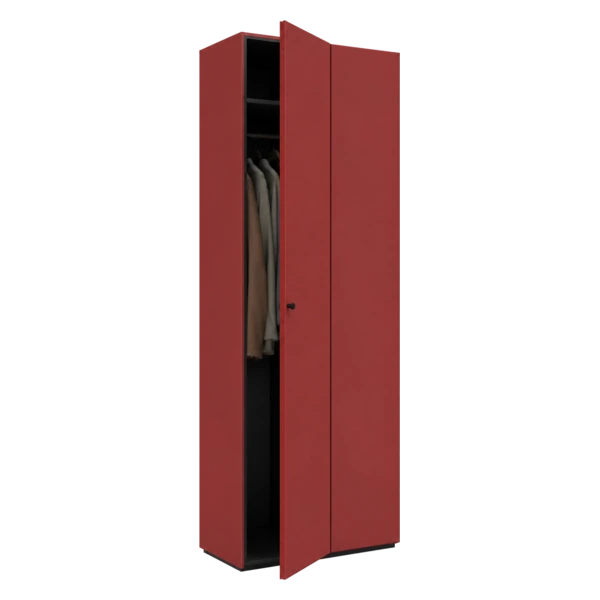
Tip: At depths under 55 cm, the clothing rail is mounted perpendicular (from front to back), not parallel. This way, clothes on hangers fit perfectly even at 40 cm depth.
Wardrobe Depth: Your Options and What Fits
Depth is perhaps the most critical dimension for a hallway wardrobe. Here is what you can store at each depth:
- 35 cm depth — ideal for very narrow hallways. Fits shoes on angled shelves, small bags, gloves and hats. A perpendicular clothing rail supports 4-5 hangers per row. Perfect for a shoe cabinet with doors.
- 40 cm depth — the most popular option for hallways. Fits light jackets on hangers (perpendicular), sport shoes, backpacks. Drawers at this depth are spacious enough for scarves, gloves, keys and wallet.
- 45 cm depth — the optimal depth when space allows. Fits winter coats on hangers, tall boots on the lower shelf, shopping bags. At 45 cm you can also install a pull-out shoe rack that saves vertical space.
- 50-55 cm depth — maximum comfort. The clothing rail can be mounted parallel (classic orientation), all clothes fit without compression. Recommended if you also store seasonal clothes (thick winter jackets, long coats).
Ideal Compartmentalization for Hallway
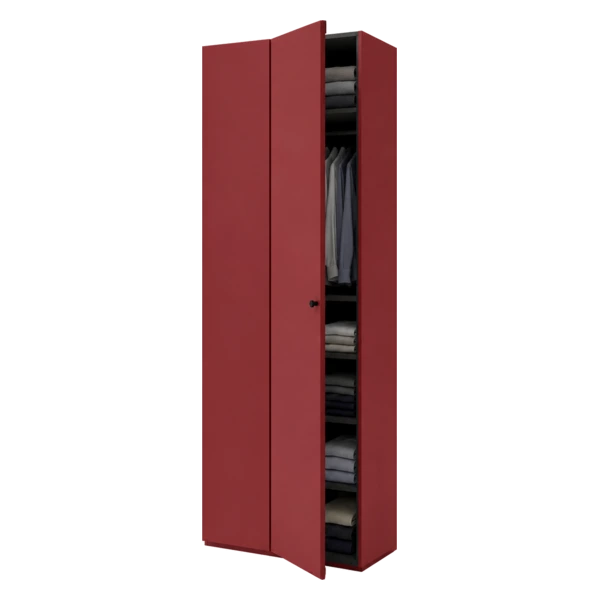
- Clothes zone (center): Clothing rail at ~160 cm height for jackets and coats
- Shoe zone (bottom): 2-3 shelves at 15-20 cm distance between them
- Storage zone (top): One or two shelves for hats, gloves, scarves, boxes
- Drawer for keys and small items: A drawer at 90-100 cm height, easily accessible
Interior Organization in Detail
A well-organized hallway means finding everything you need in 10 seconds — when you leave home at 7:00 AM, you do not want to search for your keys. Here is a tested organization plan:
- Shoes: Shelves at 15 cm intervals for everyday shoes (first 2 levels), a shelf at 25 cm distance for winter boots. A drip tray on the lower shelf prevents moisture from reaching the wardrobe body.
- Jackets and coats: Clothing rail at 160-170 cm for adults, a second level at 110 cm if you have children. Out-of-season clothes can go on the top shelf in fabric storage boxes.
- Bags and backpacks: A shelf at 140-150 cm height, accessible without effort. You can also add a lateral hook on the inside of the door for your everyday bag.
- Keys, wallet, phone: A small drawer at 90-100 cm is ideal. Alternatively, an open niche at the same height serves as a "pocket-emptying zone" when you arrive home.
- Umbrellas: A narrow compartment (10-15 cm) with a moisture-resistant base.
Recommended Materials for High-Traffic Areas
The hallway is the highest-traffic area in the home. Daily entries and exits, dirty shoes, wet clothes — materials must withstand intense wear. Recommendations:
- 18 mm Egger melamine chipboard — resistant to scratches and surface moisture. Quality melamine does not peel even under heavy use.
- 2 mm ABS edging — on all exposed edges, applied with laser bonding. Protects the chipboard core from moisture brought in by wet shoes or damp clothes.
- Hafele hardware — hinges and slides tested for 80,000+ cycles. In a hallway, the wardrobe door opens 8-10 times a day — that means 3,000+ openings per year.
- Recommended colors: White, light grey or natural oak — they brighten the hallway space which usually has no window.
Mirror on the Door: Functional and Decorative
If your hallway does not have a separate mirror, mounting one on the wardrobe door is an excellent solution. The mirror serves a double purpose: you check yourself before leaving and it creates the illusion of a wider space. At Téchne, you can add a mirror to one or more doors directly from the configurator. The mirror is applied across the full surface of the front panel, without visible frames or edges, for a modern, clean look.
Design Ideas
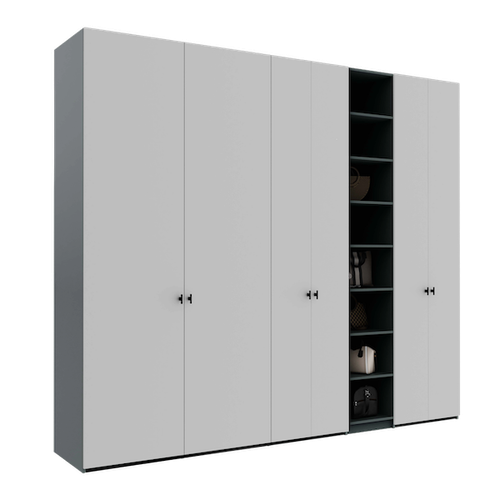
- White facades — brighten the hallway and create a sense of more space
- Mirror on the door face — functional and creates an illusion of depth
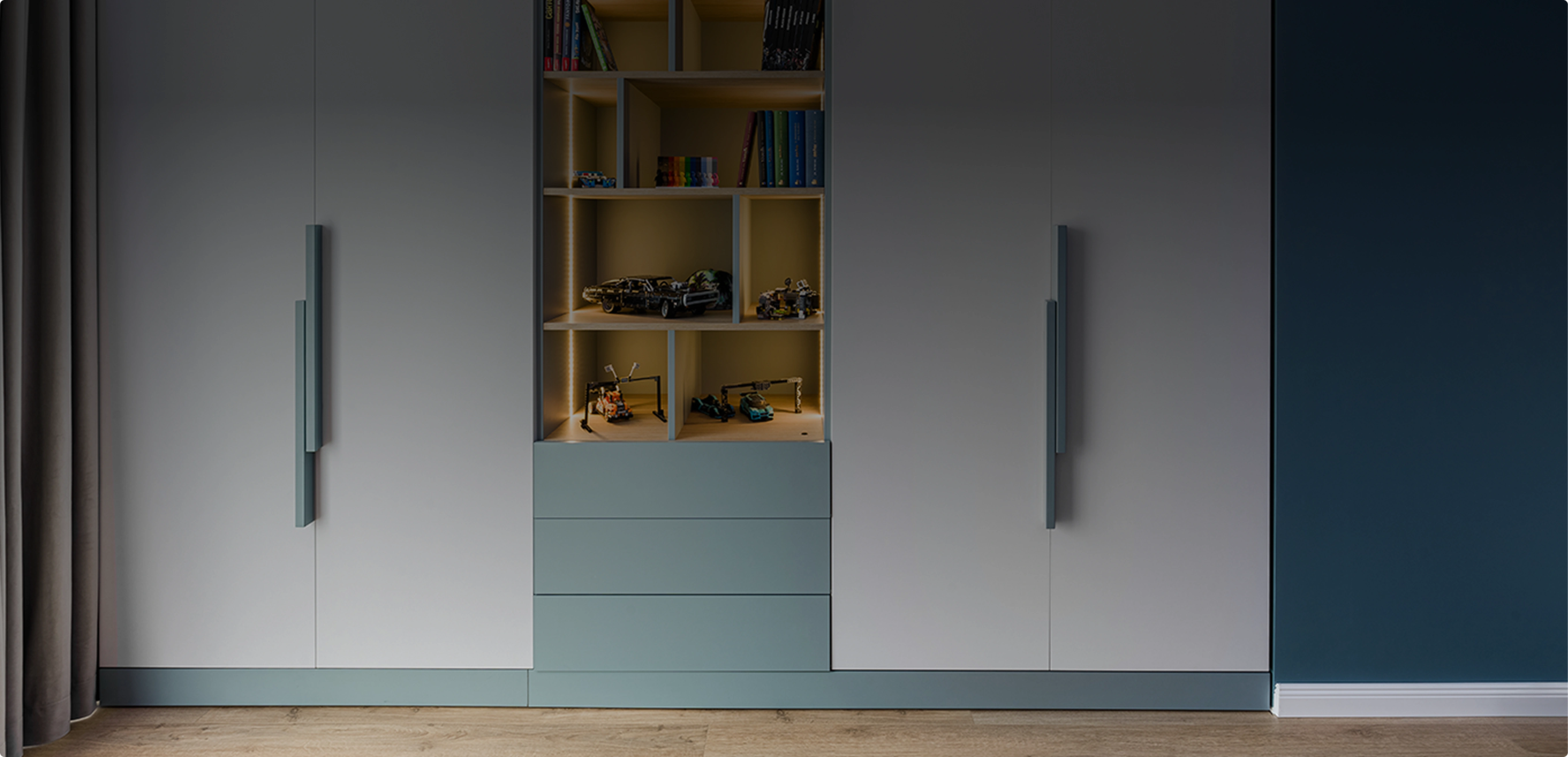
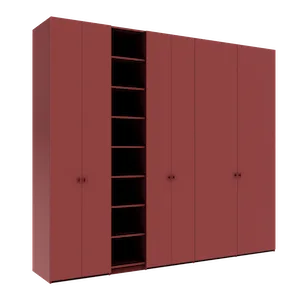
- Open + closed combination — a section with doors for clothes + an open niche with hooks and shelf for everyday items
How Much Does a Hallway Wardrobe Cost?
A custom hallway wardrobe of 100-150 cm width costs between 2,000-4,000 RON, depending on materials and accessories. The price includes 18 mm chipboard, Hafele hardware and ABS edging on all margins.
With a configurator, you can adjust every detail and see the exact price in real time. The Téchne configurator protects you from mistakes — it automatically validates dimensions and material combinations, so you get exactly what you designed.
Configure your hallway wardrobe Every order is verified by a human operator before entering production.