
Shoe Storage: Complete Guide to the Perfect Hallway Shoe Cabinet
Discover hallway shoe cabinet types, optimal dimensions for different footwear, and smart seasonal organization solutions.
The hallway is your home's first impression, and shoes scattered on the floor can ruin any welcoming entrance. A well-designed shoe cabinet solves both the aesthetic and practical challenges — every pair has its place, access is quick, and proper ventilation prevents unpleasant odors.
Types of Shoe Cabinets: Which One Suits You?
There are three main categories of shoe cabinets, each with distinct advantages:
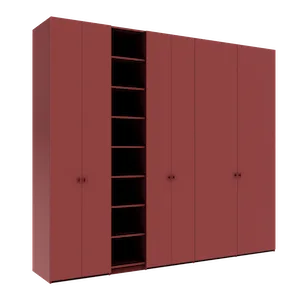
- Open shelf shoe racks — ideal for large families, offering full visibility and natural ventilation. The downside is that dust settles more easily on footwear.
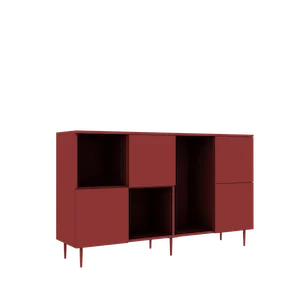
- Flip-down compartment cabinets — save depth space, integrate elegantly into hallway furniture, and maintain a tidy appearance. Hafele hardware ensures smooth and durable operation of each compartment.
- Pull-out drawer shoe cabinets — provide complete access to all contents, are easy to clean, and allow category-based organization. Hafele soft-close slides add an extra layer of comfort.
Optimal Dimensions for Different Footwear
An efficient shoe cabinet accounts for actual footwear dimensions. Here is a practical guide:
- Women's flat shoes — compartment height: 12-15 cm, minimum depth: 25 cm
- Men's shoes (size 43-45) — compartment height: 15-18 cm, minimum depth: 32 cm
- Tall boots — compartment height: 35-45 cm, depth: 30-35 cm
- Sports shoes / sneakers — compartment height: 18-20 cm, depth: 30 cm
- House slippers — a 10 cm open shelf is sufficient
A custom shoe cabinet allows you to combine compartments of different heights, optimizing every available centimeter.
Ventilation: The Detail That Makes the Difference
Footwear stored in enclosed spaces without ventilation develops unpleasant odors and mold. Smart solutions include:
- Doors with decorative perforations — allow air circulation without compromising aesthetics
- Clearance under the first shelf — a 2-3 cm gap between the cabinet base and the first shelf facilitates airflow
- Metal bar shelves instead of solid shelves — provide superior ventilation
At Téchne, your shoe cabinet can be configured with any of these options, adapted to your style and needs.
Seasonal Organization: Smart Rotation
An effective organization strategy involves rotating footwear by season:
- Quick access zone (eye level and just below) — current season shoes worn frequently
- Upper zone — special occasion footwear
- Lower zone or deep drawers — off-season footwear stored in boxes or textile bags
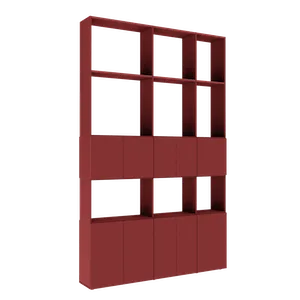
A custom shoe cabinet with a minimum height of 120-140 cm provides enough space for 15-20 pairs organized by zones. For larger families, a 180-200 cm cabinet can accommodate 30-40 pairs.
The Shoe Cabinet as Part of Hallway Furniture
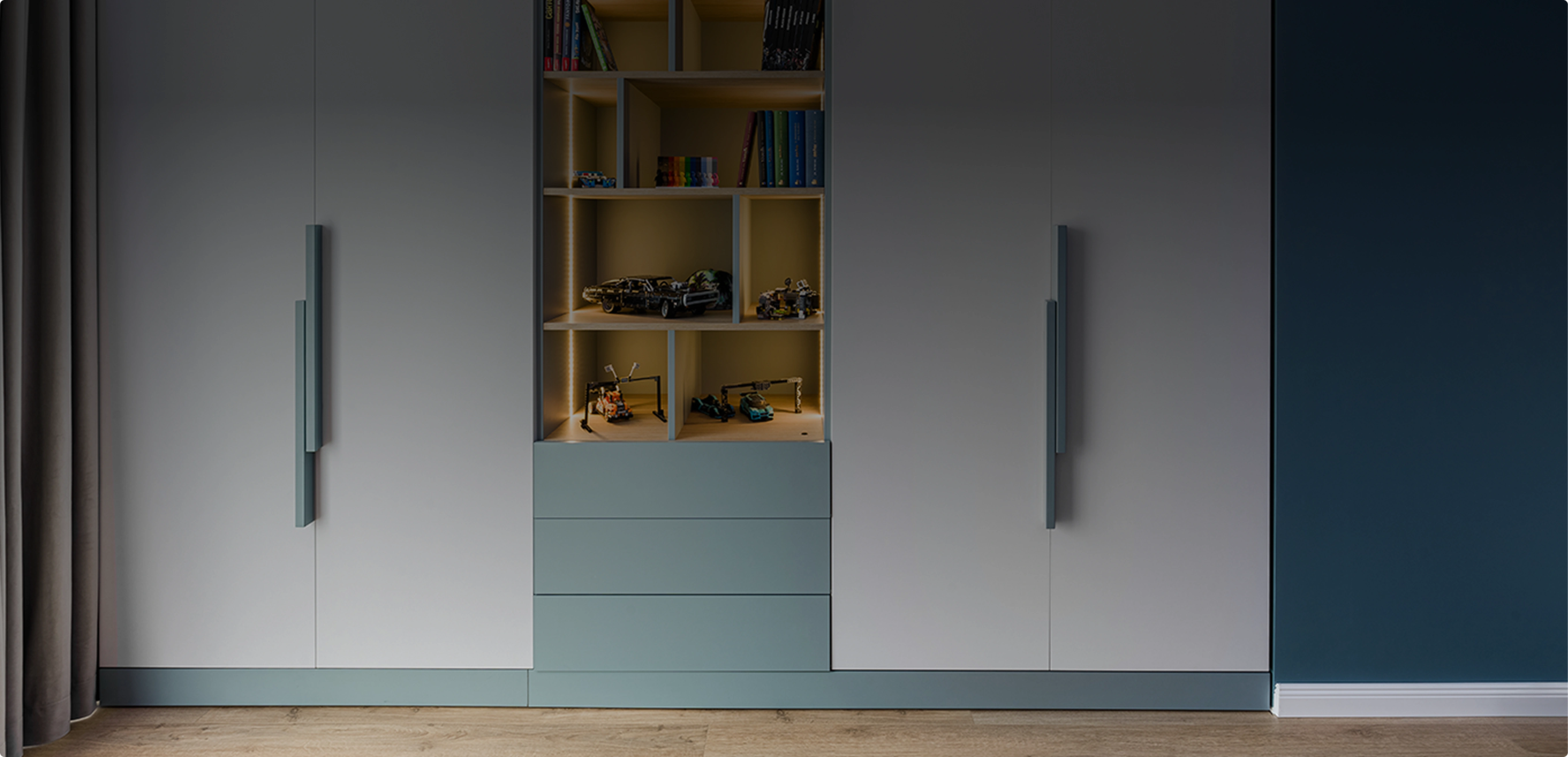
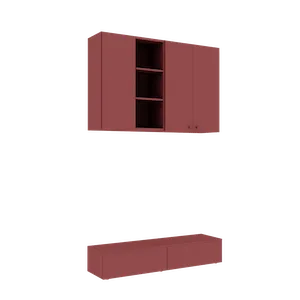
The best results come when the shoe cabinet is integrated into the overall hallway furniture ensemble — coat rack, mirror, bench, and upper storage. A unified ensemble, built to the same dimensions and from the same materials, transforms the hallway from a transit space into an organized and welcoming area.
The Téchne configurator lets you design a shoe cabinet tailored to your hallway dimensions, choose the compartment type, and visualize the result before ordering.
Configure your ideal shoe cabinet now: Open the Téchne configurator
How Many Pairs of Shoes Do You Need to Store?
Before choosing a shoe cabinet, make an honest inventory of the footwear in your household. Studies show that an average adult owns 12-20 pairs of shoes, and a family of 4 can easily reach 50-60 pairs. Here is a practical estimate:
- Single person or couple — shoe cabinet with 8-12 compartments, height 100-140 cm
- Family with 1-2 children — shoe cabinet with 15-20 compartments, height 160-200 cm or two separate units
- Large family or shoe collectors — combined storage system: hallway shoe cabinet + storage boxes in the wardrobe
The golden rule: plan 20% more space than you think you need. Shoe collections grow over time, and an overcrowded shoe cabinet quickly becomes messy and difficult to use.
Materials and Finishes for Hallway Shoe Cabinets
A shoe cabinet is exposed to specific conditions — moisture from wet footwear, dirt from soles, and intense mechanical wear. Choosing the right materials extends its lifespan:
- Melamine chipboard with 2mm ABS edging — protects panel edges against moisture and impacts. Thin 0.4mm edging peels off quickly in hallway conditions.
- Pull-out metal or plastic trays — for daily seasonal shoes, trays are easier to clean than chipboard shelves.
- Raised base from the floor — a 5-10 cm gap between the shoe cabinet and floor makes cleaning underneath easier and prevents direct contact with water from wet shoes.
In the Téchne configurator, you can choose materials and finishes that best suit your hallway — from natural oak for a warm look to matte white for a modern and bright appearance. The configurator automatically validates dimensions — if you enter a width or depth that isn't feasible, the system informs you immediately.
Integrating the Shoe Cabinet into Hallway Design
A well-organized hallway combines multiple functions in a compact space: shoe storage, coat rack, mirror, seating bench, and possibly upper storage for hats, gloves, or bags. The key is visual coherence — all elements in the same materials and colors create a unified appearance.
For narrow hallways (under 120 cm wide), a shallow hallway wardrobe that also integrates a shoe compartment is the optimal solution. A depth of 30-35 cm is sufficient for shoes and saves circulation space. For more generous hallways, an ensemble with a separate shoe cabinet and clothing wardrobe provides maximum organization.