
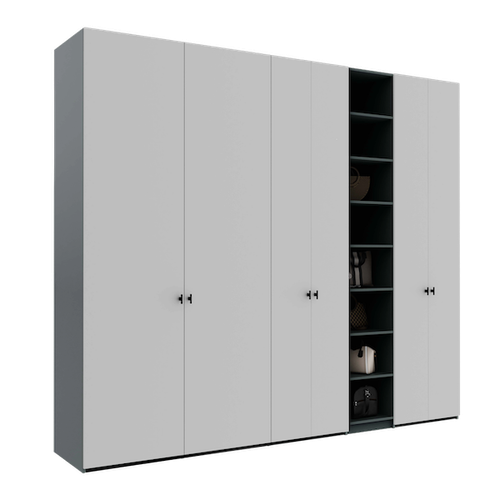
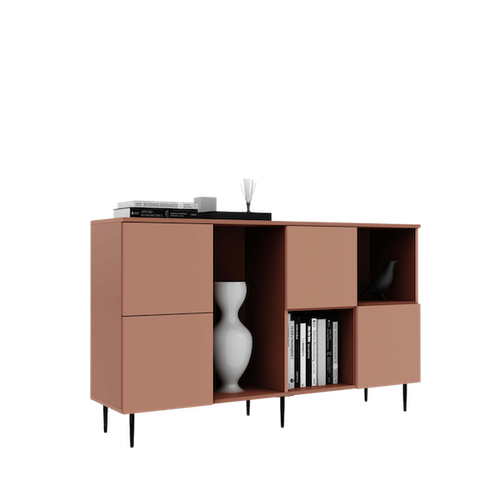
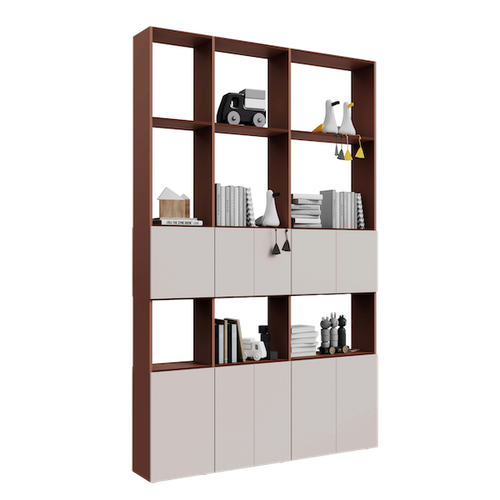
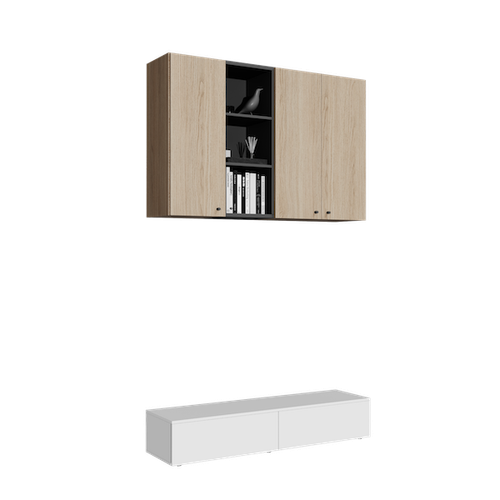
Built-in wardrobe in a niche: complete measuring and planning guide
Learn how to plan a perfect built-in wardrobe for your niche. Detailed guide with millimeter-precise measuring tips, advantages over freestanding wardrobes, and solutions for atypical spaces.
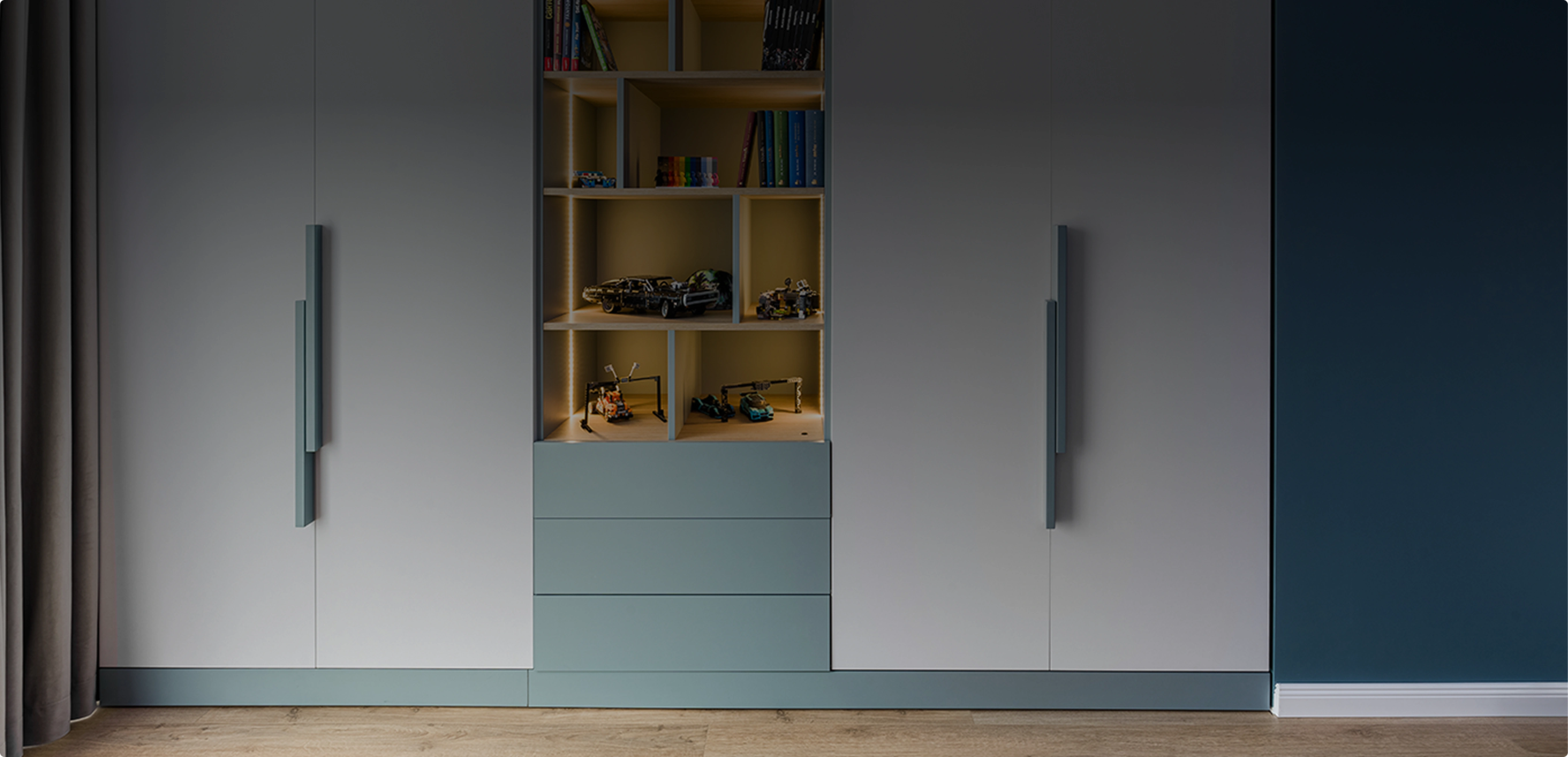
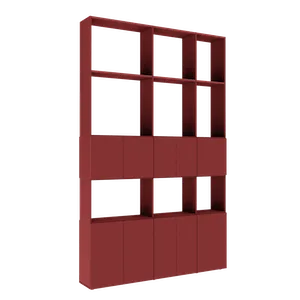
A built-in wardrobe in a niche or alcove is one of the smartest investments you can make in your home. Unlike standard flat-pack furniture, a built-in wardrobe uses every millimeter of available space, integrates perfectly into the room's architecture, and adds value to your property. In this comprehensive guide, we explain step by step how to measure, plan, and achieve the ideal built-in wardrobe.
Why choose a built-in wardrobe?
Many homes have niches, alcoves, or irregular spaces that remain unused. A built-in wardrobe transforms these dead spaces into functional and aesthetic storage areas. Here are the main advantages:
- 100% space utilization — The wardrobe is built to the exact dimensions of the niche, with no side, top, or bottom gaps.
- Integrated, elegant appearance — A built-in wardrobe looks like part of the wall, creating a clean, orderly look.
- Added property value — Built-in furniture increases the market value of your apartment or house.
- Customized configuration — The interior adapts exactly to your needs: shelves, drawers, clothing rails, accessories.
How to correctly measure a niche for a wardrobe
Correct measurement is the most important step. An error of a few millimeters can cause installation problems. Here is what you need to do:
- Measure the width at 3 points — at the top, middle, and bottom of the niche. Note the smallest value.
- Measure the height at 3 points — on the left, center, and right. Again, note the minimum.
- Measure the depth — The recommended standard depth is a minimum of 55 cm to allow hanging clothes on hangers (standard hanger = 42-45 cm + movement space).
- Check perpendicularity — Walls and ceilings are rarely perfectly straight. Use a spirit level or laser to verify.
- Identify obstacles — Outlets, switches, heating pipes, beams — all must be noted and communicated to the manufacturer.
What to know about niche walls
Niche walls can be made of various materials: brick, concrete, drywall, or aerated concrete blocks. Each material requires a different type of fastening. At Téchne Furniture, we design built-in wardrobes with a fastening system adapted to the wall material, ensuring long-term stability.
If the walls are not perfectly straight (and they rarely are), the wardrobe is designed with small tolerances and covering profiles are used to mask any irregularities. The final result is a wardrobe that looks as if it was built together with the house. The Téchne configurator helps you manage these situations — it automatically validates dimensions and warns you if something falls outside structural parameters.
Interior configuration of the built-in wardrobe
The major advantage of a custom wardrobe is that the interior is configured exactly to your lifestyle:
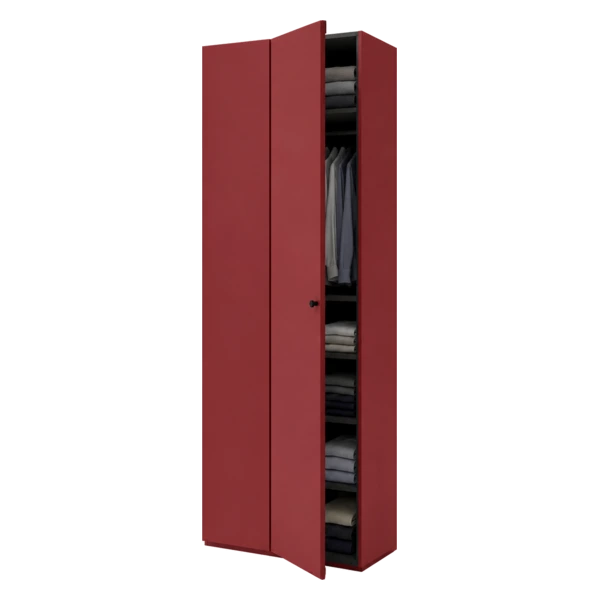
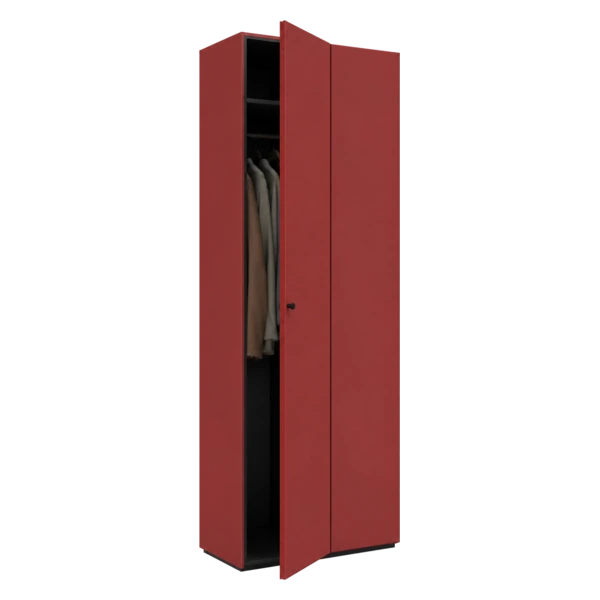
- Hanging zone — Double rail (top and bottom) for shirts and jackets, single full-height rail for dresses and coats.
- Shelf zone — Ideal for folded clothes, bags, storage boxes. We recommend shelves spaced 30-35 cm apart.
- Drawers — Drawers with Hafele full-extension, soft-close runners are essential for underwear, accessories, and small items.
- Special accessories — Directly in the configurator: pull-out trouser rack, pull-out shoe rack, pull-out metal basket, pull-out jewellery drawer, clothes lift. For tie holders or interior mirrors, turn to Téchne Studio, our premium full-service division.
Built-in wardrobe vs freestanding wardrobe
A freestanding wardrobe may seem like a simpler solution, but it comes with significant compromises. It leaves side gaps that accumulate dust, does not adapt to ceiling height, and has standardized dimensions that rarely match the available space. A built-in wardrobe eliminates all these problems.
How much does a built-in wardrobe cost?
The price varies depending on dimensions, chosen materials, and interior complexity. Generally, a custom built-in wardrobe is a long-term investment — quality materials and Hafele hardware ensure a lifespan of over 20 years.
At Téchne Furniture, the process begins with our online configurator, where you can experiment with dimensions, compartments, and finishes.
Tips from professional installers
Our installation team's experience has taught us some valuable lessons. First, photograph the niche before measuring and send the photos along with the dimensions — a picture says more than a thousand numbers. Second, check whether there is moisture on the niche walls, especially if the niche is on an exterior wall. A built-in wardrobe in a niche with moisture problems requires a vapor barrier or a ventilation gap at the back.
Third, think about access to outlets and switches before the design phase. It is much simpler to reposition an outlet before installation than to modify the wardrobe afterwards.
Start configuring your built-in wardrobe and discover the perfect solution for your niche.
Interior lighting for niche wardrobes
An aspect often overlooked with built-in wardrobes is interior lighting. Niches usually have reduced brightness, and a wardrobe without its own lighting makes finding clothes difficult, especially early in the morning or in the evening. The recommended solution is a sensor LED strip, mounted on the top edge of each compartment. The strip turns on automatically when hinged doors are opened and turns off a few seconds after closing.
At Téchne, the clothes rail with LED lighting (without sensor) can be added directly in the configurator, while the sensor LED option — the battery-powered Elite LED rail — is available separately in the shop. The recommended color temperature is 4000K (neutral white), which renders clothing colors faithfully — important for differentiating close shades of navy, black, or dark gray.
Solutions for non-standard niche dimensions
Not all niches are perfect rectangles. Some have angled walls, sloped ceilings, or offsets of a few centimeters between the left and right sides. The Téchne configurator handles these situations through the adjustable top panel on each column — each column can have a different height, adapting to any ceiling geometry.
For side walls that are not perfectly vertical, the standard solution is a covering profile (edge cap) that masks the gap of a few millimeters between the wardrobe and the wall. This profile is painted in the body color and becomes practically invisible after installation.