
How to Measure Your Space for Custom Furniture: A Step-by-Step Guide
Measurement mistakes are costly. Follow our step-by-step guide and configure custom furniture with perfect dimensions — directly online, with instant pricing.
You've chosen the design, decided on the colors, and you're ready to configure. Then the app asks for dimensions and you realize you're not sure you measured correctly. Width from wall to wall or frame to frame? Height to the ceiling or just below the beam?
Measurement errors are among the most common problems when ordering custom furniture — leading to pieces that don't fit, costly adjustments, or delayed timelines. With the right tools, measuring correctly takes no more than 15 minutes.
1. What You Need Before You Start
- A rigid metal tape measure, 3-5 meters
- Pencil and paper or a sketch app on your phone
- A flashlight for darker corners
- A spirit level (optional but useful)
2. Width: Measure at Three Points
Measure at 20 cm from the floor, at mid-height (~110 cm), and 20 cm from the ceiling. Use the smallest value. Leave 3-5 mm tolerance for installation and thermal expansion.
3. Height: Ceiling, Beam, or Alcove?
Open wall: measure floor to ceiling at two points, use the smaller value.
Beam or lowered ceiling: measure to the lowest point. The Techne configurator allows different heights per module.
Alcove: measure height, width and depth at multiple points — niches are rarely perfect.
4. Depth: Don't Guess It
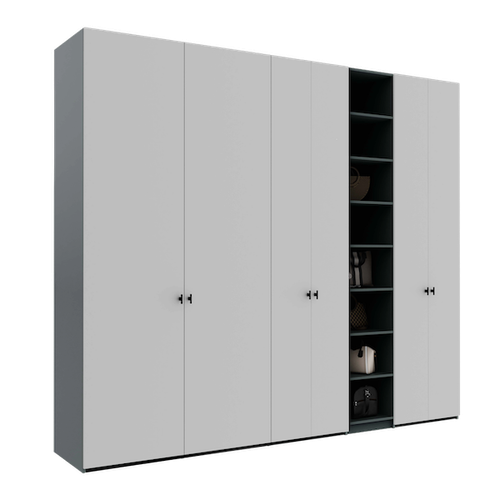
- Wardrobe for hanging clothes: 55-60 cm
- Shelf modules / linen wardrobe: 40-45 cm
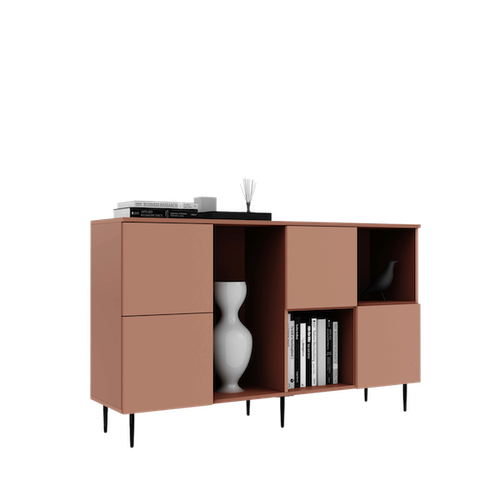
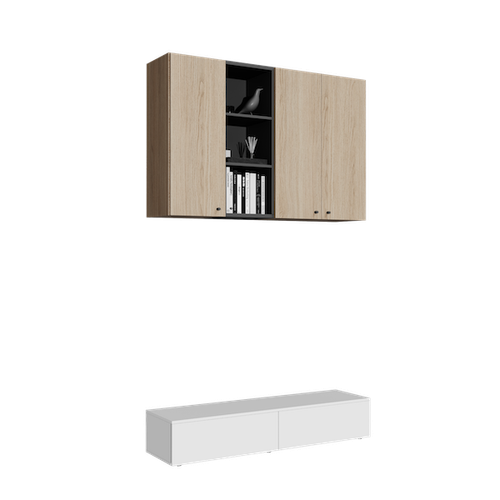
- Sideboard or wall-hung TV unit: 30-40 cm
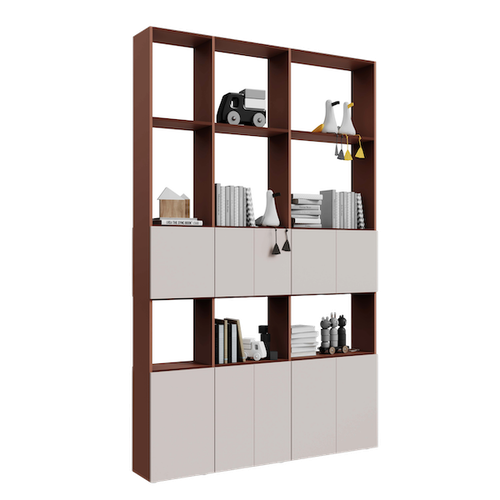
- Bookcase: 25-35 cm
5. Note All Obstacles
Mark the exact position of outlets, switches, radiators, and pipes. This allows the configurator to adjust shelf or drawer positions accordingly.
6. Use the Online Configurator
Enter your dimensions into the Techne configurator to see your furniture in real time, choose interior options, and get instant pricing — no showroom visit needed.
Conclusion
Three dimensions, measured at multiple points, plus obstacle positions — that's all you need to configure custom furniture perfectly adapted to your home.