
How to Choose Furniture Colors: A Complete Coordination Guide
Discover how to choose the right colors for your furniture: color psychology, 2026 trends, melamine chipboard combinations, and tips for coordinating with walls and floors.
Furniture color defines the atmosphere of a room more than any other decorative element. An inspired choice transforms an ordinary space into one that relaxes you, energizes you, or helps you focus. A wrong choice can make the room feel smaller, darker, or simply discordant. In this guide, we explain how to choose custom furniture colors to achieve exactly the desired effect.
Color psychology in interior design
Each color influences mood and spatial perception:
- White and light tones — create a sense of space, light, and cleanliness. Ideal for small rooms or those with little natural light
- Gray — sophisticated and neutral, pairs with any color accent. Warm gray tones (greige) are particularly versatile
- Black and dark tones — dramatic and elegant, but require large spaces and abundant light to avoid closing in the room
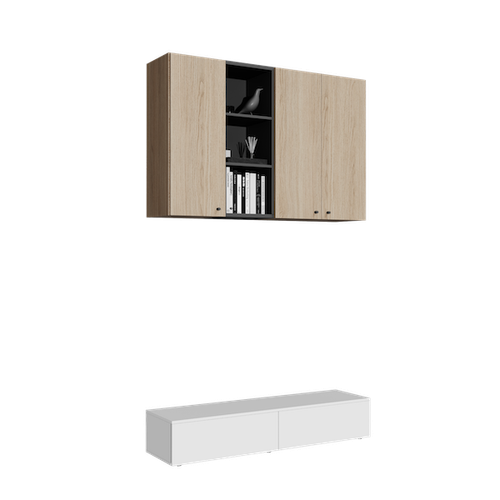
- Natural wood (oak, walnut, beech) — brings warmth and authenticity. Light oak tones dominate 2026 trends
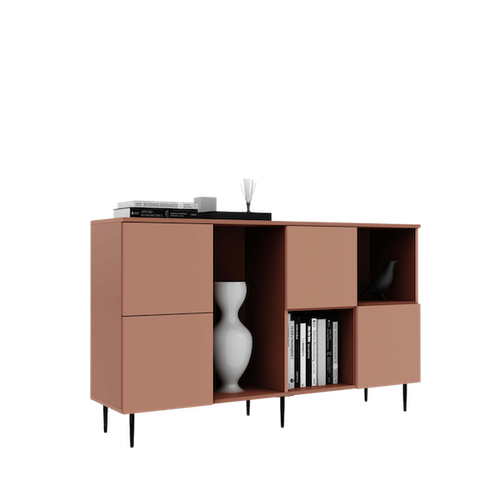
- Earth tones (brown, beige, sand) — relaxing and connected to nature, perfect for bedrooms and living rooms
Color trends in 2026
In 2026, furniture trends lean toward naturalness and controlled contrast. Light oak remains the star, combined with accents of deep green or deep blue. Warm white tones (not bright white, but white with a cream or gray undertone) dominate kitchen furniture and modern dressing rooms. For those who want a strong visual impact, the combination of dark walnut with metallic details or fronts in saturated colors is a bold but elegant option.
How to coordinate furniture with walls and floors
The basic rule is controlled contrast: furniture should visually differentiate itself from walls and floors without creating a violent contrast. A few practical principles:
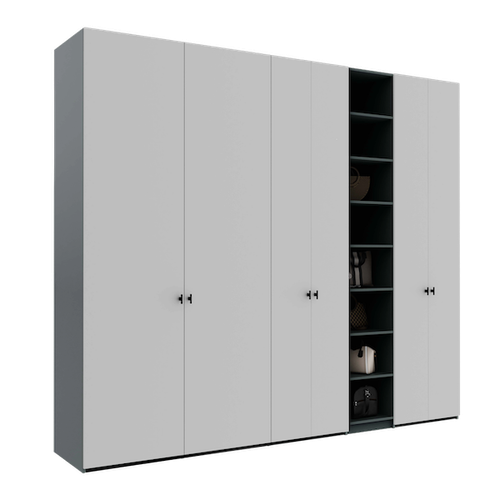
- Light walls + medium furniture — the safest combination. White or light gray walls with oak or medium gray furniture
- Dark floor + light furniture — creates a visual lifting effect, making the room appear taller
- Tone on tone — walls, floor, and furniture in the same color family but different shades. Sophisticated look, but requires varied textures to avoid monotony
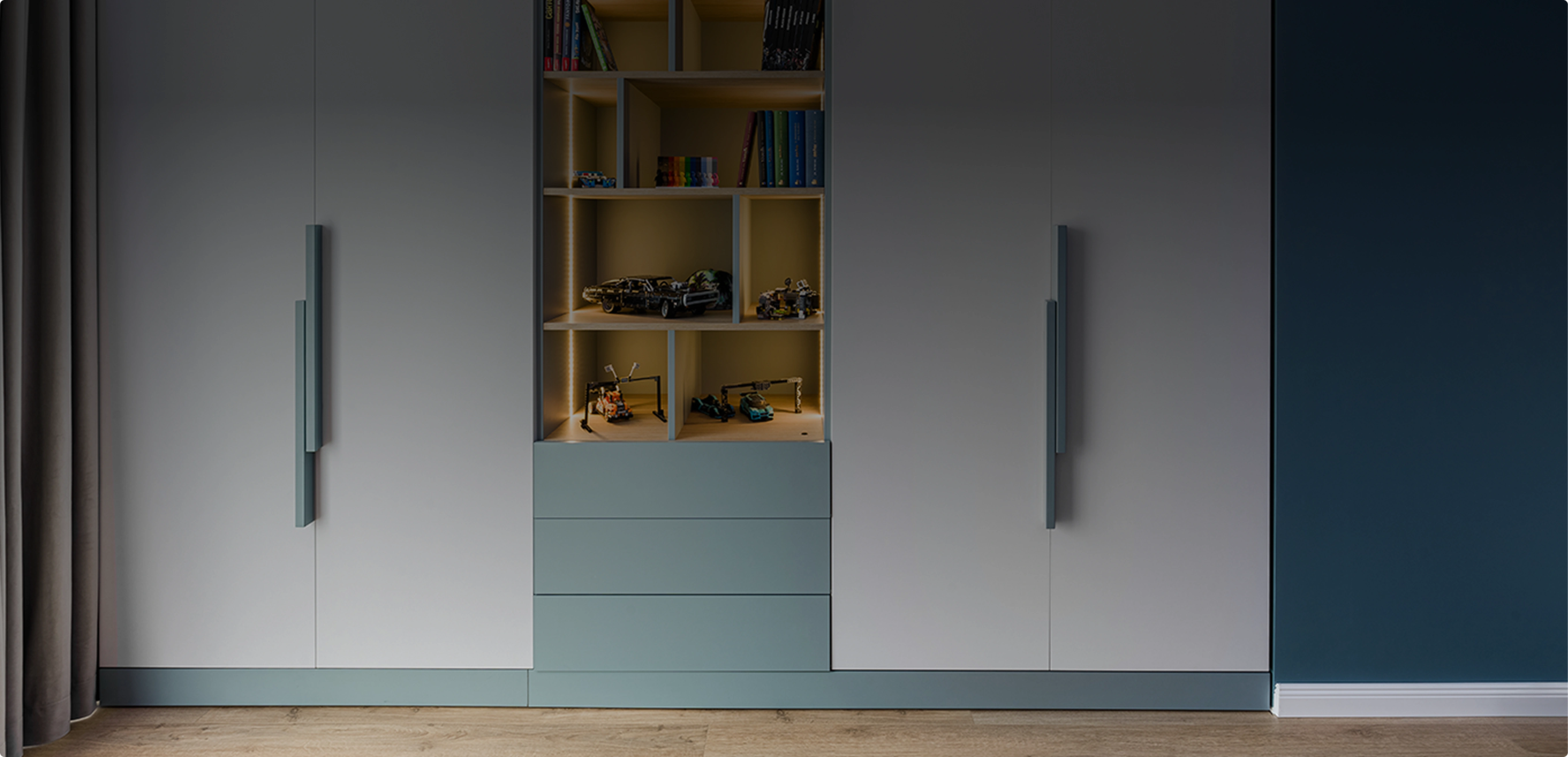
- Color accent — neutral furniture with a single element in a strong color (a drawer front, an interior shelf, an illuminated niche)
Popular melamine chipboard colors
In the Téchne configurator you have access to a wide range of melamine chipboard decors. Our customers' most popular choices are:
- Halifax Oak — natural texture with visible grain, available in light and medium variants
- Elegant White W980 ST2 — matte white with fine texture, versatile and timeless
- Pietra Gray — medium gray with a warm undertone, excellent for bedrooms and offices
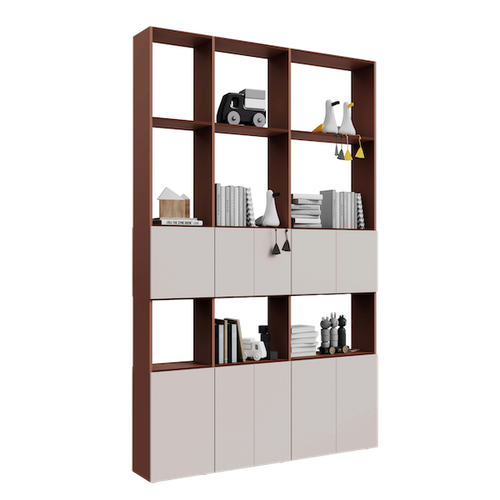
- Pacific Walnut — dark brown with reddish reflections, for a luxurious look
- Chicago Concrete — modern industrial look, popular in kitchens and contemporary living rooms
Light colors versus dark colors
Choosing between light and dark tones depends on several factors. Light colors are recommended for small rooms (under 12 sqm), spaces with little natural light, families with small children (scratches and fingerprints are less visible on white than on black), and minimalist or Scandinavian styles. Dark colors work well in spacious rooms (over 16 sqm), spaces with large windows and abundant light, classic or industrial styles, and as accents in a predominantly light ensemble.
Practical coordination tips
Before choosing the final color, keep in mind a few tested tips:
- Order melamine chipboard samples and analyze them in the actual room, under both natural and artificial light — colors look different on screen versus reality
- Limit the palette to a maximum of 3 main colors in the same room
- Use the same carcass color for all furniture pieces in a room, varying only the fronts
- Metal handles and hardware (Hafele offers finishes in nickel, matte black, and gold) visually connect different pieces
- If you choose a wood-textured decor, make sure the grain direction is consistent across all fronts
Color is not just an aesthetic matter — it is a decision that influences how you feel in your own space. With the right attention to coordination and context, custom furniture becomes an element that unifies the entire room. Explore all color and texture options in the Téchne configurator and see how your ideal combination looks. In the Téchne configurator, every color and material combination is automatically validated — the system shows only compatible options, eliminating the risk of error.
Physical samples: why they are essential
A laptop or phone screen cannot faithfully reproduce the colour and texture of a melamine chipboard decor. The colour temperature of the room lighting, surface reflections, and tactile texture are impossible to evaluate on a screen. This is why ordering physical samples is a step we recommend before any final decision. You receive real-sized chipboard pieces that you can place next to the wall, next to the floor, and under both natural and artificial light. The difference between what you see on screen and what you physically touch can be surprising — especially with grey tones and wood-textured decors, where subtle nuances make all the difference. Samples are free and reach you within 2-3 business days.