
Glass shelves in a wardrobe: clear or smoked? Configuration guide 2026
Clear or smoked 4 mm glass shelves are now in the Téchne configurator: where they fit, which back panel they need, minimum spacing and how the price works.
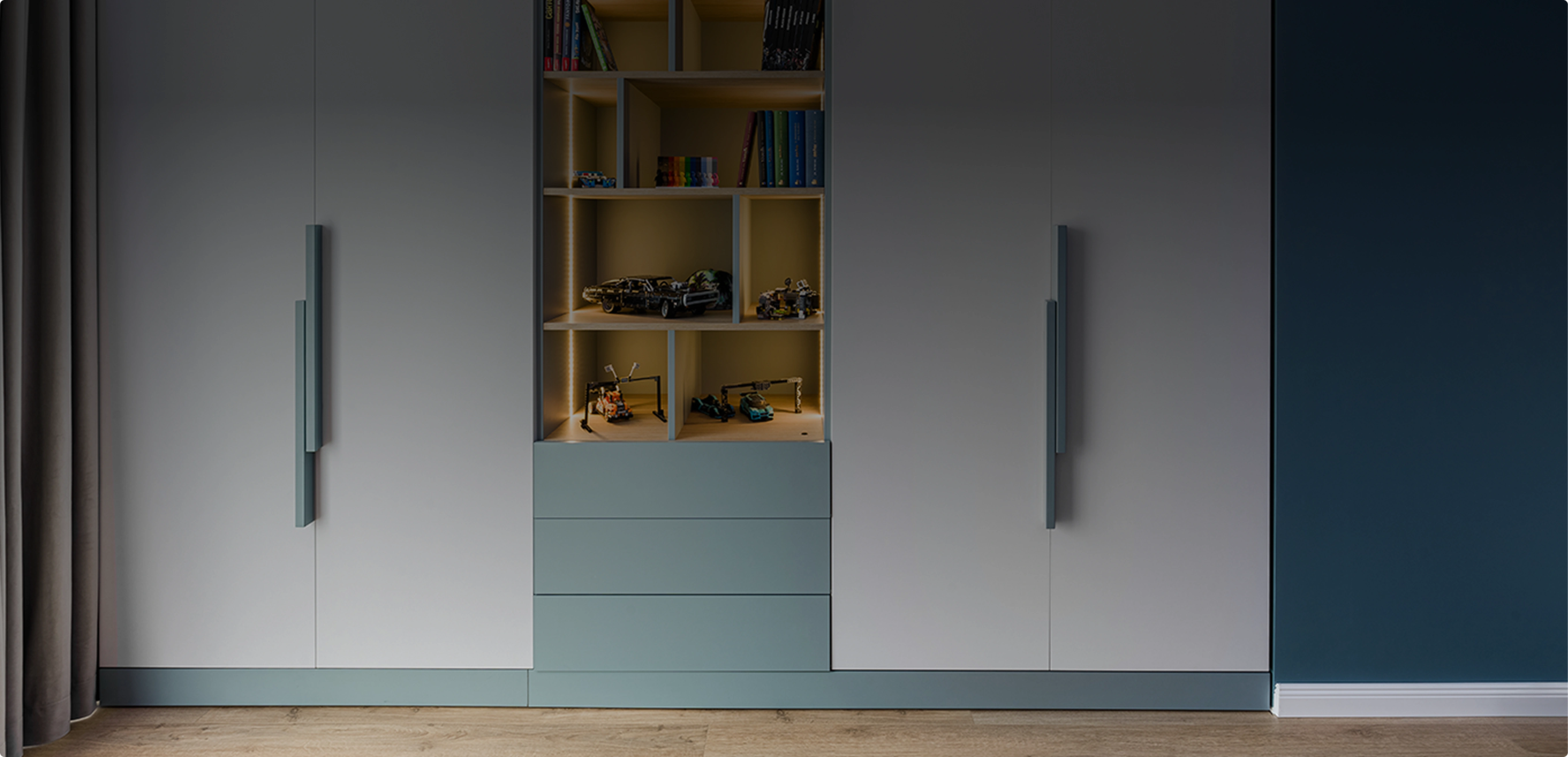
Glass shelves completely change how the inside of a cabinet looks. Where a chipboard shelf visually splits a compartment into boxes, glass lets light and the eye pass through. Objects seem to float, and a cabinet with glass doors or an open niche starts to feel like a display case.
Since early October 2026, glass shelves can be added directly in the Téchne configurator as an interior element, in two versions: clear glass and smoked glass. This guide explains the rules behind them, so you know in advance what you can configure and what you will receive.
In short
- 4 mm thick, in two tints: clear or smoked.
- Polished edges all around, with a 45° bevel on top and bottom.
- They need an 18 mm chipboard back panel — the shelf also rests on the back of the cabinet.
- A dedicated compartment: no rails, baskets or drawers in the same cell as glass shelves.
- At least 10 cm between two shelves and from the shelf below or above.
- One tint per cabinet: all glass shelves in the same piece are either clear or smoked.
Clear glass or smoked glass?
Clear glass is the discreet choice. It almost disappears, lets the interior colour show and puts the focus on what you display: vases, beautiful books, collections, perfumes, bags. It works with white or light interiors and with Scandinavian, minimalist or classic styles.
Smoked glass has a dark grey tint and a more elegant, lounge-like feel. It pairs very well with dark fronts, matt black hardware and interiors in dark wood or anthracite tones. It also hides small traces of dust better and adds depth to a niche.
Because all glass shelves in one cabinet share the same tint, the configurator aligns them automatically: add a smoked shelf to a wardrobe that already has clear ones and they all become smoked. This avoids a patchy interior and an order that is hard to produce.
Why an 18 mm chipboard back is required
A glass shelf takes up the full width and depth of the compartment and rests on dedicated connectors — on the sides and on the back of the cabinet. A thin HDF back cannot take that fixing, so glass shelves can only be added to cabinets with an 18 mm chipboard back panel.
If you already have glass shelves and switch the back to HDF, the configurator warns you that the shelves will be removed; you can cancel and everything goes back to how it was. The differences between the two back types are covered in our guide wardrobe back: HDF or 18 mm laminated panel. An aesthetic bonus: an 18 mm back in the cabinet colour looks much better through glass than HDF.
How to add and arrange them
- Open the configurator, for example the wardrobe configurator, and set an 18 mm chipboard back.
- From the interior accessories menu choose Clear glass shelf or Smoked glass shelf.
- Place the shelf in a free compartment. Each time you add one to the same cell, the shelves are automatically redistributed at equal distances.
- If you want different spacing, select a shelf and drag it up or down; dimensions are shown while it is selected and the position is saved with the configuration.
- The menu shows a badge with the total number of glass shelves in the cabinet.
The configurator tells you why a shelf cannot go somewhere: the back is not 18 mm chipboard, the compartment already has other accessories, or the 10 cm minimum between shelves is no longer available.
Why a dedicated compartment?
A glass shelf is meant for display, not for hangers. As with interior drawers, the glass-shelf cell is dedicated: it uses the full width and depth, with no clothes rails, baskets or drawers in the same cell. To combine them, split the column with a chipboard shelf: glass shelves above, drawers or a rail below.
The 10 cm rule leaves room to place and remove objects and for the connectors. If you later make the compartment smaller and the shelves no longer fit under this rule, the configurator removes the extra ones.
How the price is calculated
A glass shelf does not have a fixed unit price. As with mirrors and glass on doors, the price is made up of:
- the glass area (compartment width × shelf depth), at the price per m² of the chosen glass;
- edge polishing all around, calculated per linear metre — a larger shelf has more edge to process;
- the dedicated connectors for glass shelves.
Everything shows up instantly in the configurator price, like any other element.
Ideas
- A living-room display cabinet: a cabinet with aluminium-frame glass doors and clear glass shelves inside — objects are visible from every angle.
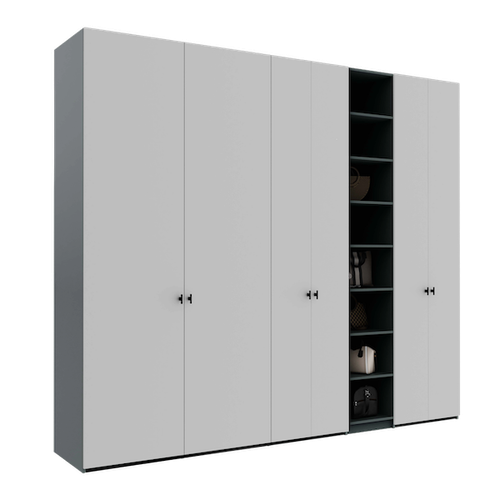
- An open niche in a walk-in wardrobe: a narrow column with smoked shelves for bags, watches or perfumes, between columns with solid doors.
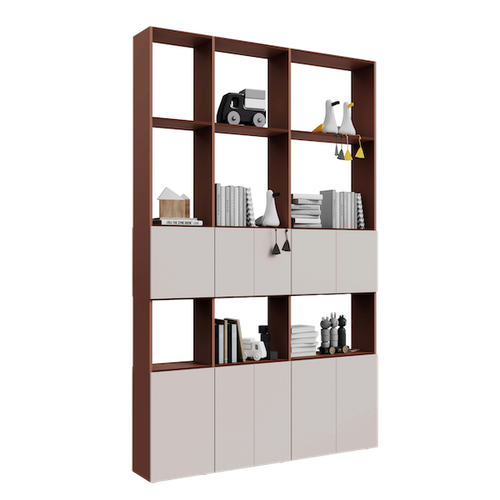
- A bookcase or room divider: glass shelves in the upper compartments, chipboard shelves below for heavy books.
For cleaning, the same advice applies as for glass doors in our guide how to clean mirror and glass wardrobe doors: microfibre cloth, a mild solution, no abrasives.
Try it in the configurator
The easiest way to choose between clear and smoked is to see both on your own project. Open the configurator, set an 18 mm chipboard back, add the shelves and rotate the cabinet in 3D. If you have questions, write to us on the contact page.